 ComorosComoros is an Indian Ocean island nation of three main islands, known for Mount…
DESTINATION
Ethiopia
Ethiopia is a landlocked country in the Horn of Africa, known for ancient heritage, highland landscapes, Orthodox traditions and coffee culture.
📅 Last updated:
🌍 Quick Facts

Ethiopia at a glance
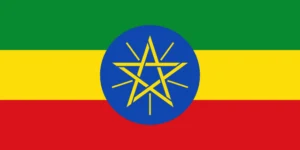
Capital: Addis Ababa
Currency: Ethiopian birr (ETB)
Language: Amharic (federal working language), Oromo, Tigrinya, Somali
Population: Over 100 million
Time zone: East Africa Time (UTC+3)
Calling code: +251
Internet domain: .et
Main airport: Addis Ababa Bole International Airport (ADD)
Best time to visit: October to March (dry season in the highlands)
📍 Ethiopia Map
🖼️ Ethiopia: Location, History, Culture & Food
✨ Complete Travel Guide
Safety Notice (checked November 2026): The US Department of State advises travellers to reconsider travel to Ethiopia (Level 3, advisory dated 1 April 2026) and says not to travel to several regions, including Tigray, Afar, Amhara, Gambella and Benishangul-Gumuz, specific areas of Oromia, and border areas with Somalia, Sudan, South Sudan, Kenya and Eritrea. The UK FCDO advises against all travel to parts of the country, including Tigray, Amhara and Gambela, and against all but essential travel to other areas. Both describe Addis Ababa as comparatively stable, but conditions can change without warning. Read the full texts at the US State Department and the UK FCDO before you plan. This does not mean the whole country is unsafe; the warnings apply to named areas.
Where Is Ethiopia Located?
Ethiopia is a landlocked country in the Horn of Africa, in northeastern Africa. It borders Eritrea, Djibouti, Somalia, Kenya, South Sudan and Sudan. Its capital, Addis Ababa, sits on a high plateau near the centre of the country, while the Great Rift Valley runs through Ethiopia from north to south.
Last checked: November 2026
Most of the country is highland. Addis Ababa lies at roughly 2,300 to 2,400 metres above sea level, which gives it a mild climate for a place so close to the equator. The Simien Mountains in the north hold the country’s highest peak, Ras Dejen, at about 4,550 metres, while the Danakil Depression in the northeast drops far below sea level and counts among the hottest places on Earth.
Within these borders the landscape changes sharply from one region to the next. Cool, farmed plateaus and deep river gorges characterise the highlands, the Rift Valley holds a chain of lakes and hot springs, and the dry lowlands toward Djibouti, Somalia and Kenya feel like a different country altogether. This variety shapes how people live, what they grow and how each region sees itself.
Ethiopia has been landlocked since Eritrea became independent in 1993. Trade relies heavily on the port of Djibouti, connected to Addis Ababa by road and by the electrified Addis Ababa–Djibouti railway. Lake Tana in the northwest is the source of the Blue Nile, and the Rift Valley lakes to the south of the capital are a major feature of the central landscape.
Introduction to Ethiopia
Ethiopia is a federal republic with well over 100 million people, which makes it one of the most populous countries in Africa. It is known for ancient Christian and Islamic heritage, highland scenery, its own calendar and writing system, and a deep coffee culture. Addis Ababa also hosts the headquarters of the African Union.
Last checked: November 2026
The official name is the Federal Democratic Republic of Ethiopia. Amharic is the federal working language, and Oromo, Tigrinya, Somali and many other languages are spoken across regions. The currency is the Ethiopian birr, the international calling code is +251, and the country follows East Africa Time (UTC+3) all year. The internet domain is .et.
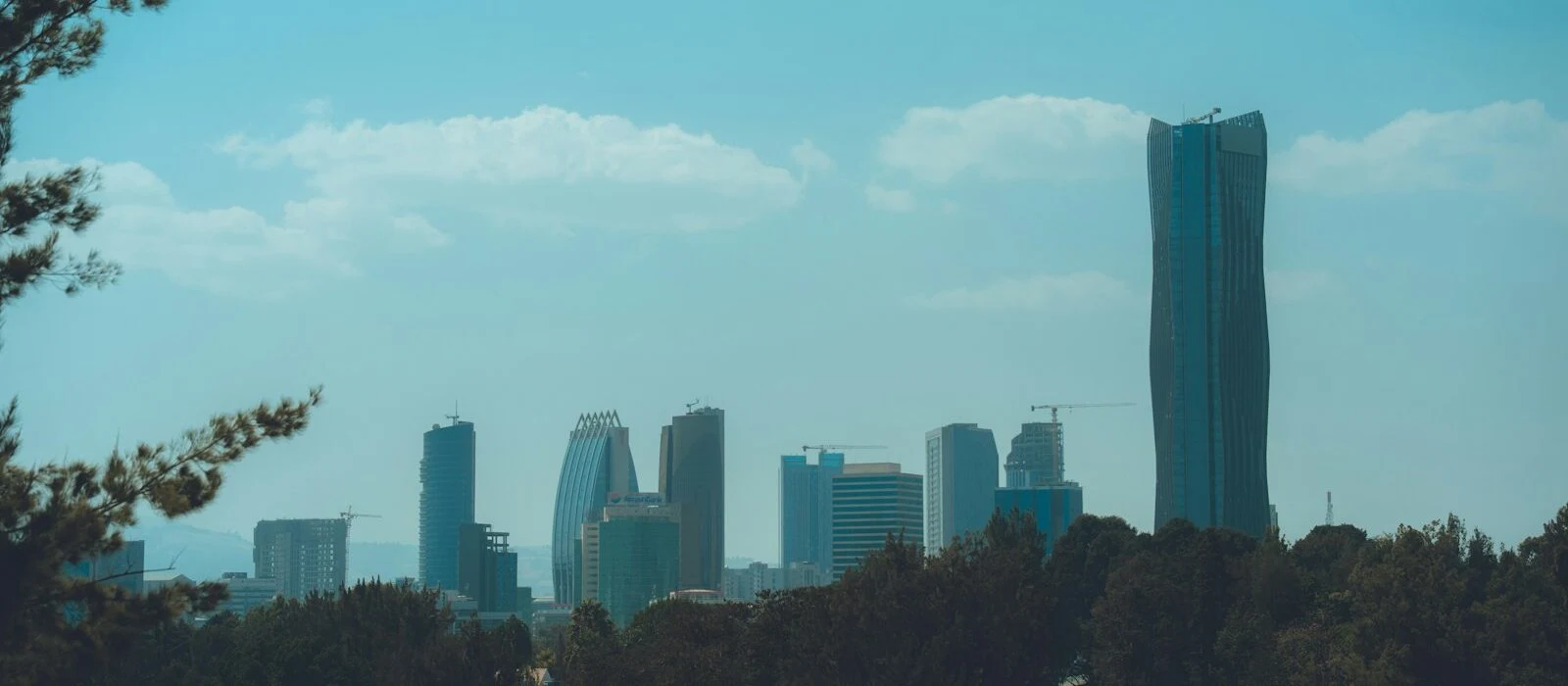
Daily life blends old and new. In Addis Ababa, office towers and construction cranes stand beside church courtyards, street coffee stalls and open-air markets, while many people in rural areas still farm the highlands much as earlier generations did. Understanding that mix helps visitors read the country as a place of living traditions, not only monuments.
UNESCO lists 12 World Heritage properties in Ethiopia, among the most in Africa. They range from the rock-hewn churches of Lalibela and the ancient stelae of Aksum to the walled city of Harar Jugol, the Bale Mountains and the fossil sites of Melka Kunture and Balchit. Ethiopia also uses its own calendar of thirteen months, which runs several years behind the Gregorian one, so visitors often find that dates and festivals follow a different rhythm. To prepare, start with our guides to visa and entry rules and the best places to visit in Ethiopia.
History of Ethiopia
Ethiopia has one of the longest historical records in Africa. Fossils such as "Lucy" show that early human ancestors lived here over three million years ago. The Kingdom of Aksum rose in the first millennium AD, and Ethiopia defeated Italy at Adwa in 1896, staying independent apart from a brief Italian occupation from 1936 to 1941.
Last checked: November 2026
The Kingdom of Aksum controlled trade between the Red Sea, Africa and the wider Mediterranean world. In the fourth century its king Ezana adopted Christianity, and the Ethiopian Orthodox Church has shaped national life ever since. Later, the Zagwe dynasty is linked with the carving of the churches at Lalibela, and from the late thirteenth century the Solomonic dynasty ruled much of the highlands.
In the nineteenth century, emperors such as Tewodros II, Yohannes IV and Menelik II worked to unify and modernise the state. Menelik’s forces defeated an Italian army at Adwa, an event that became a symbol of African resistance to colonialism. Haile Selassie ruled from the 1930s, and his government was overthrown in 1974, after which a military regime, the Derg, held power until 1991.
Since 1991 Ethiopia has been a federation of regional states, and Eritrea separated in 1993. The country has experienced serious internal conflicts in recent years, including the war in the Tigray region from 2020 to 2022, and tensions and unrest persist in several regions, which is why current official travel advice matters.
Culture and Traditions of Ethiopia
Ethiopian culture blends Orthodox Christian, Muslim and many indigenous traditions across more than 80 ethnic groups. Religious festivals, fasting seasons, the Ethiopian calendar and the coffee ceremony shape daily life. Hospitality is central, and visitors are often invited to share food and coffee.
Last checked: November 2026
Orthodox Christianity is deeply woven into the north and centre of the country, while Islam has a long history in the east and in cities such as Harar. Major Orthodox celebrations include Genna (Ethiopian Christmas, 7 January), Timkat (Epiphany, around 19 January) and Meskel, which marks the finding of the True Cross in late September. UNESCO has recognised Timkat and the Gada system of the Oromo people as elements of intangible cultural heritage. Many Orthodox Christians fast on Wednesdays and Fridays and during a long pre-Easter Lent, so vegetarian "fasting food" is widely available.
The Ethiopian calendar has twelve months of thirty days and a short thirteenth month, and the new year, Enkutatash, falls in September. The Ge’ez script, used to write Amharic and Tigrinya, is among the few indigenous African writing systems still in everyday use. Music and dance vary by region, from the shoulder-shaking eskista of the Amhara to the songs of azmari minstrels in Addis Ababa’s bars.
Coffee holds a special place. Ethiopia is widely regarded as the birthplace of Coffea arabica, and the traditional buna ceremony involves roasting green beans, brewing in a clay pot called a jebena, and serving three rounds. Accepting at least one cup is a polite gesture. Dress is generally modest, and visitors to churches and mosques should cover shoulders and knees and follow local instructions on footwear.
Food and Cuisine of Ethiopia
Ethiopian food centres on injera, a sour flatbread, served with stews called wat and shared from a communal plate. Meals are spicy, rich in legumes and vegetables, and shaped by Orthodox fasting days. Coffee is served in a ceremony, and many dishes are eaten by hand.
Last checked: November 2026
Injera is made from teff, a tiny grain native to the Ethiopian highlands, which is fermented and cooked on a large griddle. Food is eaten with the right hand, and sharing a bite fed to a companion, called gursha, is a sign of friendship. Spice blends such as berbere and clarified butter flavoured with herbs, known as niter kibbeh, give many dishes their depth.
Signature dishes to look for include:
- Doro wat: a spicy chicken stew with a hard-boiled egg, often served at celebrations.
- Kitfo: minced beef seasoned with spiced butter and chilli, eaten raw, lightly cooked or fully cooked.
- Tibs: sautéed pieces of beef or lamb with onions and peppers.
- Shiro: a smooth stew of ground chickpea or broad bean flour, a staple on fasting days.
- Misir wat: red lentils cooked in berbere sauce.
- Kik alicha: mild yellow split peas with turmeric and ginger.
- Gomen: collard greens simmered with garlic and spices.
- Beyaynetu: a fasting platter with several vegetarian stews on one sheet of injera.
- Firfir: shredded injera mixed into a spiced sauce, common at breakfast.
- Dulet: minced tripe, liver and beef sautéed with chilli and spices.
- Genfo: a thick porridge with a well of spiced butter, popular in rural areas.
Regional kitchens differ. Highland cooking leans on teff, barley and spiced butter, the east has its own bread, tea and spice traditions, and the south uses root crops such as enset, a banana-like plant whose starchy pulp is turned into bread. Ask for the local specialty wherever you eat, because the best dishes often vary from town to town.
Traditional drinks include tej, a honey wine, and tella, a home-brewed grain beer. Muslim visitors will find halal meat widely available, and vegetarians are well served because of the fasting tradition.
Ready to plan? Read our guides to Ethiopia visa requirements, the best places to visit, the best time to visit Ethiopia, sample Ethiopia itineraries, where to stay, flights to Ethiopia and getting around Ethiopia.
Explore Ethiopia Travel Guides
Explore our detailed guides to plan every part of your Ethiopia trip.
Explore Ethiopia Tours
Discover guided tours and adventures in Ethiopia. Compare itineraries, prices and traveller reviews on TourRadar before you book.
Guided tours & deals
Affiliate partner · Globe Navo may earn a commission from qualifying bookings at no extra cost to you.
❓ Ethiopia FAQ
Where is Ethiopia located?
Ethiopia is a landlocked country in the Horn of Africa, bordering Eritrea, Djibouti, Somalia, Kenya, South Sudan and Sudan. Its capital, Addis Ababa, sits on a high plateau near the centre, and the Great Rift Valley crosses the country from north to south.
What is the capital and currency of Ethiopia?
The capital is Addis Ababa, which also hosts the headquarters of the African Union. The national currency is the Ethiopian birr (ETB). The international calling code is +251, and the country follows East Africa Time (UTC+3) all year round.
What languages are spoken in Ethiopia?
Amharic is the federal working language, while Oromo, Tigrinya, Somali and many other languages are spoken across the regions. Amharic and Tigrinya are written in the Ge-ez script. Learning a few Amharic greetings is a friendly gesture that locals usually appreciate.
What is Ethiopian food like?
Ethiopian food centres on injera, a sour teff flatbread, served with spicy stews called wat and eaten by hand from a shared plate. Many dishes are vegetarian because of Orthodox fasting days, and meals are often followed by a traditional coffee ceremony.
Does Ethiopia use a different calendar?
Yes. The Ethiopian calendar has twelve months of thirty days plus a short thirteenth month, and it runs several years behind the Gregorian calendar. The new year, Enkutatash, falls in September, so check dates carefully when planning around festivals such as Timkat and Meskel.
Plan Your Trip to Ethiopia
Your Next Adventure in Ethiopia Awaits!
Explore Deals →🎁 Best deals for Ethiopia
Offers from trusted travel stores for your Ethiopia trip. Compare a few options before you book, and check each store's terms for the final price.
Browse by type: Hotel deals · Flight deals · Travel eSIM · Car rental
 SimOptionsFind the latest SimOption promo code and coupon code for travel eSIM data plans. See how to apply an offer at checkout, fix common code errors and stay connected abroad.
Get Coupon View Deal
 TourRadarTourRadar is an online marketplace for multi-day guided tours, small-group trips and tailor-made journeys offered by independent tour operators around the world.
Get Coupon View Deal
More destinations to explore
ComorosComoros is an Indian Ocean island nation of three main islands, known for Mount…
 BulgariaPlan a trip to Bulgaria with top destinations, UNESCO sites, the best time to…
 CubaCuba travel guide covering where Cuba is, its history, culture and traditions, and its…