 AustriaAustria is a Central European country known for Vienna, Salzburg, Hallstatt and the Alps,…
DESTINATION
Eritrea
Eritrea is a Red Sea country in Eastern Africa, known for Asmara’s UNESCO-listed modernist architecture, its coffee ceremony and spiced stews served on injera.
📅 Last updated:
🌍 Quick Facts

Eritrea at a glance
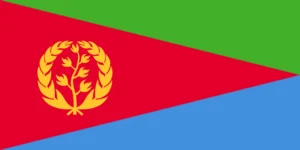
Capital: Asmara
Currency: Nakfa (ERN)
Language: Tigrinya, Arabic, English
Population: About 6.4 million (2025 est.)
Calling code: +291
Main airport: Asmara International Airport (ASM)
📍 Eritrea Map
🖼️ Eritrea: Location, History, Culture & Food
✨ Complete Travel Guide
Safety Notice: The UK Foreign, Commonwealth and Development Office advises against all travel within 25 km of Eritrea’s land borders with Djibouti, Ethiopia and Sudan, and warns of landmines near the borders. It also states that foreign visitors need a permit to travel outside the Central Region (Zoba Maekel). The US State Department lists Eritrea at Level 2, “Exercise Increased Caution”. These warnings apply to specific areas and conditions, not to every part of the country. Check the latest advice from your own government before you plan a trip. Advisories last checked: November 2026.
Where Is Eritrea Located?
Eritrea is in Eastern Africa on the Red Sea coast, between Djibouti and Sudan, with Ethiopia to the south. It covers about 117,600 square kilometres, and its capital, Asmara, sits on a highland plateau above 2,000 metres.
Last checked: November 2026
The country lies around 15° north and 39° east, in the Horn of Africa region. It shares land borders with three neighbours: Sudan to the west and north-west, Ethiopia to the south, and Djibouti to the south-east. To the east lies the Red Sea.
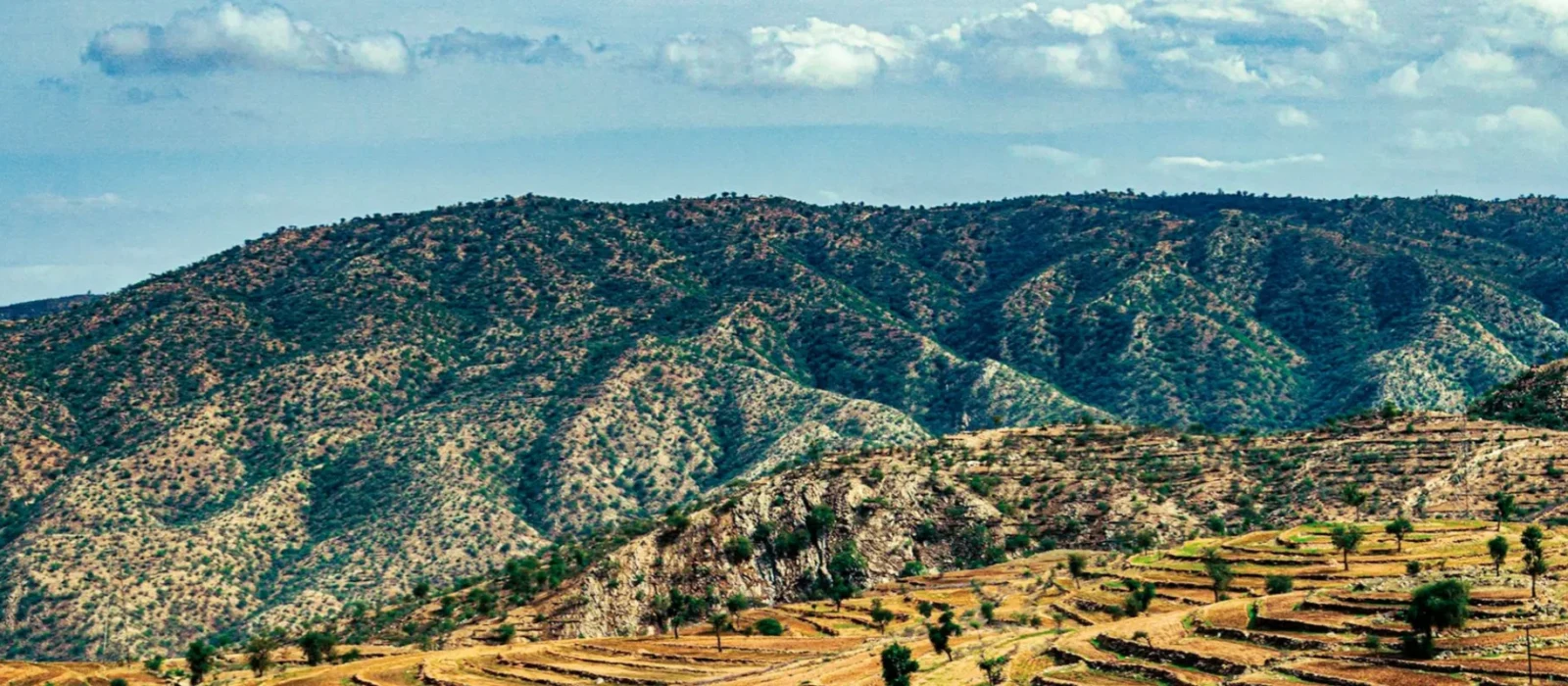
The landscape changes sharply from one region to the next. A hot, dry desert strip runs along the Red Sea coast, while the central highlands are cooler and wetter. Offshore, the Dahlak Archipelago is known for coral reefs that have stayed relatively undisturbed because of the islands’ isolation.
Elevation explains most of the contrast. According to the CIA World Factbook, the central highlands receive up to about 61 centimetres of rain a year and stay noticeably cooler than the coast, while the Red Sea strip is hot and dry. That is why a single country can feel like several different destinations, and why the capital’s climate says little about conditions on the coast or islands.
The Red Sea position gives Eritrea strategic importance. The country kept the whole Red Sea coastline of the former Ethiopian territory when it became independent, and that coast runs alongside one of the world’s busiest shipping lanes.
Administratively, Eritrea is divided into six regions, called zobas. Asmara belongs to the Central Region, known locally as Zoba Maekel, and it is the main hub for the country’s historic architecture and cultural life.
Introduction to Eritrea
Eritrea is a small Red Sea country of about 6.4 million people, with Asmara as its capital. Its identity blends highland and lowland cultures, Italian colonial architecture and a long coastline. Its currency is the nakfa, and Tigrinya, Arabic and English are the languages most often listed as official.
Last checked: November 2026
The CIA World Factbook estimates the population at around 6.4 million. It lists nine recognised ethnic groups, with the Tigrinya and Tigre the largest. Many people also speak Afar, Kunama, Saho and other Cushitic languages. About 43 percent of Eritreans live in cities, and the population is young, with a median age of roughly 20 years.
For the visitor, Asmara is the main draw. In 2017 UNESCO inscribed it as “Asmara: A Modernist African City”, Eritrea’s first World Heritage Site. Its wide avenues, piazzas, cafés and early twentieth-century buildings give the city a character found nowhere else in Africa.
Many Eritreans live abroad, and the diaspora has long supported the country, including during the independence war. Tourism inside Eritrea is on a small scale, so practical planning matters more here than in many destinations. Start with the Eritrea visa and entry guide, then read about the best places to visit in Eritrea and the best time to visit Eritrea. When you are ready to plan, see the Eritrea itineraries, hotels in Eritrea, flights to Eritrea and getting around Eritrea.
History of Eritrea
Eritrea’s modern history began with Italian colonisation in the 1890s, followed by British administration from 1941 and a UN-arranged federation with Ethiopia in 1952. A 30-year independence struggle ended in 1991. Eritreans voted for independence in April 1993, and the country marks Independence Day on 24 May.
Last checked: November 2026
Asmara grew from the 1890s as a military outpost of the Italian colonial power, and much of the city’s planned layout and modernist architecture dates from that period. Italian control ended in 1941, and Britain then administered the territory for about ten years. In 1952 the United Nations established Eritrea as an autonomous region within a federation with Ethiopia.
About ten years later Ethiopia annexed Eritrea as a province. That decision led to a 30-year struggle for independence, which ended in 1991 when Eritrean forces defeated the government forces. A referendum held from 23 to 25 April 1993 produced an overwhelming vote for independence, and Eritrea formally marked independence on 24 May 1993.
This history still shapes the country today. Independence Day is the national holiday, and the struggle is a central theme in public memory. Many visitors also come specifically to see how the Italian colonial layer survives in Asmara’s streets, in a city centre that UNESCO values for the way it was planned in the twentieth century.
Culture and Traditions of Eritrea
Eritrean culture draws on nine recognised ethnic groups, several religious traditions and a strong custom of hospitality. The coffee ceremony is the best-known tradition, and Christianity and Islam are both widely practised. Italian influence is clearest in Asmara’s café culture and architecture.
Last checked: November 2026
The CIA World Factbook lists Tigrinya, Tigre, Saho, Afar, Kunama, Bilen, Hedareb or Beja, Nara and Rashaida as the nine recognised groups. Each has its own language, customs and regional base. The main religious communities are Eritrean Orthodox, Roman Catholic, Evangelical Lutheran and Sunni Muslim, so festivals and daily rhythms vary by community.
The coffee ceremony is one of the most important and recognisable parts of Eritrean life. Coffee is offered when visiting friends, during festivities and as an everyday habit. It is brewed in a clay pot called a jebena over coals, and the ceremony may include burning incense such as frankincense. If you are invited, accepting is polite, and a small gift of cakes from a bakery is a thoughtful gesture.
The Italian legacy also shows in everyday life. Asmara has been called “New Rome” and “Italy’s African City” for its piazzas, wide streets and coffee bars, and panettone is often served with tea or at the coffee ceremony. The National Museum in Asmara is a useful starting point for learning about the country’s peoples and past.
National pride in independence is visible on 24 May each year, when Eritrea celebrates Independence Day. Public life, family gatherings and religious festivals all bring communities together, and food is usually at the centre of each occasion.
Food and Cuisine of Eritrea
Eritrean food centres on spiced stews called tsebhi, served on injera, a spongy fermented flatbread. Berbere, a red chilli and spice blend, gives the stews their depth. Italian colonial influence adds pasta, espresso and baked dishes, especially in Asmara, and coffee is central to hospitality.
Last checked: November 2026
Eritrean cooking is similar to Ethiopian cooking, but it is often lighter, with less spiced butter and more tomato. The coastal location also means seafood features more than in the highlands. Injera is made from teff, wheat or sorghum and works as both plate and utensil.
These are the signature dishes to look for:
- Taita (injera): the fermented sourdough flatbread that underpins most meals.
- Zigni: a spicy berbere stew of beef, lamb or goat, often described as a national dish.
- Tsebhi derho: a spicy chicken stew traditionally served with injera.
- Shiro: a stew of ground chickpea or broad bean flour, onions and tomatoes, popular as a vegetarian choice.
- Alicha: a milder vegetable stew made without berbere.
- Silsi: a fresher tomato-based stew with garlic, onion and green chillies.
- Shahan ful: sautéed mashed fava beans with onions, tomatoes, cumin, yoghurt and olive oil, commonly eaten at breakfast.
- Kitcha fit-fit: a staple of shredded flatbread mixed with spiced butter and seasoning.
- Pasta al sugo e berbere: an Italian-Eritrean pasta sauce spiced with berbere.
- Cotoletta alla milanese: an Italian breaded cutlet that has become a fixture of Asmara’s restaurants.
Traditional drinks include mies, a sweet honey wine served at celebrations, and areki, an Eritrean-style anise spirit served at festivities. Muslim Eritreans abstain from alcohol, so check with your hosts before offering it. In Asmara, restaurants serving pizza, pasta, meat, seafood and vegetarian dishes sit alongside traditional injera houses.
Breakfast often means shahan ful with bread and tea, and a mid-morning or afternoon coffee is a daily habit. Vegetarian travellers usually find it easy to eat well, because shiro, alicha, silsi and ful are all meat-free. Order a mixed plate if you want to try several stews on one piece of injera.
Explore Eritrea Travel Guides
Explore our detailed guides to plan every part of your Eritrea trip.
Eritrea: Best Places
The best places to visit in Eritrea, from Asmara’s UNESCO-listed modernist centre to the Dahlak Archipelago’s coral reefs, with access notes and...
View Guide ›Eritrea: Best Time to Visit
When to visit Eritrea: how the climate differs between the cool central highlands and the hot Red Sea coast, plus holidays, packing...
View Guide ›Eritrea: Itineraries
Realistic Eritrea itinerary ideas for 3, 5, 7 and 10 days, built around Asmara and permit-dependent extensions, with no unverified travel times.
View Guide ›Eritrea: Visa
How to approach an Eritrea tourist visa: where to apply, what the embassy guidance says, permits for travel outside the capital region...
View Guide ›Eritrea: Flights
Flying to Eritrea: Asmara International Airport, what we could and could not verify about routes, a Before You Fly checklist and quick...
View Guide ›Eritrea: Getting Around
How to get around Eritrea: walking in Asmara, travel permits outside the Central Region, why we list no timetables and a checklist...
View Guide ›Eritrea: Hotels
Where to stay in Eritrea, with Asmara as the practical base, plus how to choose accommodation, what to confirm before booking and...
View Guide ›Explore Eritrea Tours
Discover guided tours and adventures in Eritrea. Compare itineraries, prices and traveller reviews on TourRadar before you book.
Guided tours & deals
Affiliate partner · Globe Navo may earn a commission from qualifying bookings at no extra cost to you.
❓ Eritrea FAQ
Where is Eritrea located?
Eritrea is in Eastern Africa on the Red Sea coast, between Djibouti and Sudan, with Ethiopia to the south. The capital, Asmara, sits on a highland plateau, while the coast to the east is hot and dry.
What is the capital of Eritrea?
The capital of Eritrea is Asmara. UNESCO inscribed the city as Asmara: A Modernist African City in 2017, recognising its early twentieth-century planning and architecture. It remains the main cultural centre of the country.
What languages are spoken in Eritrea?
The CIA World Factbook lists Tigrinya, Arabic and English as official languages. Tigre, Kunama, Afar and other Cushitic languages are also spoken among the nine recognised ethnic groups, so the language you hear depends on the region and community.
What is the coffee ceremony in Eritrea?
The coffee ceremony is one of the most recognisable Eritrean traditions. Coffee is brewed in a clay pot called a jebena over coals and served to guests, friends and family, and incense such as frankincense may be burned. Accepting an invitation is polite.
What is Eritrean food like?
Eritrean food centres on spiced stews called tsebhi, served on injera flatbread. Berbere gives them heat and depth, and dishes such as zigni, shiro and shahan ful are common. Italian colonial influence adds pasta and espresso, especially in Asmara.
Plan Your Trip to Eritrea
Your Next Adventure in Eritrea Awaits!
Explore Deals →🎁 Best deals for Eritrea
Offers from trusted travel stores for your Eritrea trip. Compare a few options before you book, and check each store's terms for the final price.
Browse by type: Hotel deals · Flight deals · Travel eSIM · Car rental
 SimOptionsFind the latest SimOption promo code and coupon code for travel eSIM data plans. See how to apply an offer at checkout, fix common code errors and stay connected abroad.
Get Coupon View Deal
 TourRadarTourRadar is an online marketplace for multi-day guided tours, small-group trips and tailor-made journeys offered by independent tour operators around the world.
Get Coupon View Deal
More destinations to explore
AustriaAustria is a Central European country known for Vienna, Salzburg, Hallstatt and the Alps,…
 NauruNauru is a one-island Pacific nation just south of the equator. Learn about its…