 EcuadorEcuador sits on the equator in north-western South America, spanning Pacific coast, Andes, Amazon…
DESTINATION
Egypt
📅 Last updated:
🌍 Quick Facts

Egypt at a glance
Capital: Cairo
Currency: Egyptian pound (EGP)
Language: Arabic (official)
Calling code: +20
Internet domain: .eg
Main airport: Cairo International Airport (CAI)
Best time to visit: October to April (cooler months); the Red Sea coast works year-round
📍 Egypt Map
🖼️ Egypt: Location, History, Culture & Food
✨ Complete Travel Guide
Safety Notice: Official advisories for Egypt are not uniform across the country. The US State Department rates Egypt Level 2 (exercise increased caution) but says Do Not Travel for North and Middle Sinai and parts of the Western Desert. The UK FCDO advises against travel to North Sinai and areas near the Libya border. Cairo, the Nile Valley and the main resort areas are outside these zones. Check the latest advice before you go. Last checked: November 2026.
Where Is Egypt Located?
Egypt is in the northeast corner of Africa, with the Sinai Peninsula extending into Asia. It borders Libya, Sudan, Israel and the Gaza Strip, and has coastlines on the Mediterranean and Red seas. Most of its people live along the Nile and its delta.
Last checked: November 2026
The country covers roughly one million square kilometres, but only a small share is inhabited farmland. The Nile flows north through the whole country and fans out into the Delta near the Mediterranean. Either side of the valley lies desert: the Western Desert reaches towards Libya, while the Eastern Desert rises to the Red Sea hills.
The Suez Canal links the Mediterranean to the Red Sea and separates the main body of Egypt from Sinai. Cairo sits where the river begins to split into the Delta, a position that has made it a capital for centuries. Alexandria, Egypt’s main Mediterranean port, lies about two to three hours north by train.
It helps to think of Egypt as a few distinct regions. The Delta is green, crowded farmland. The Nile Valley south of Cairo, often called Upper Egypt, is a narrow ribbon of fields and towns that runs to Aswan and the border with Sudan. The Red Sea coast is a long strip of reefs and desert mountains, and the Western Desert holds scattered oases such as Siwa and Fayoum. Sinai, between the Gulf of Suez and the Gulf of Aqaba, is a rugged region of mountains and coast.
This geography explains why most sights cluster along the river and why travel between regions takes planning. For a practical view of the main regions, see our guide to the best places in Egypt.
Introduction to Egypt
Egypt is a country of about 110 million people whose capital is Cairo. Visitors come for pharaonic monuments, Nile cruises, Islamic Cairo and Red Sea diving. Arabic is the official language, and the Egyptian pound is the currency.
Last checked: November 2026
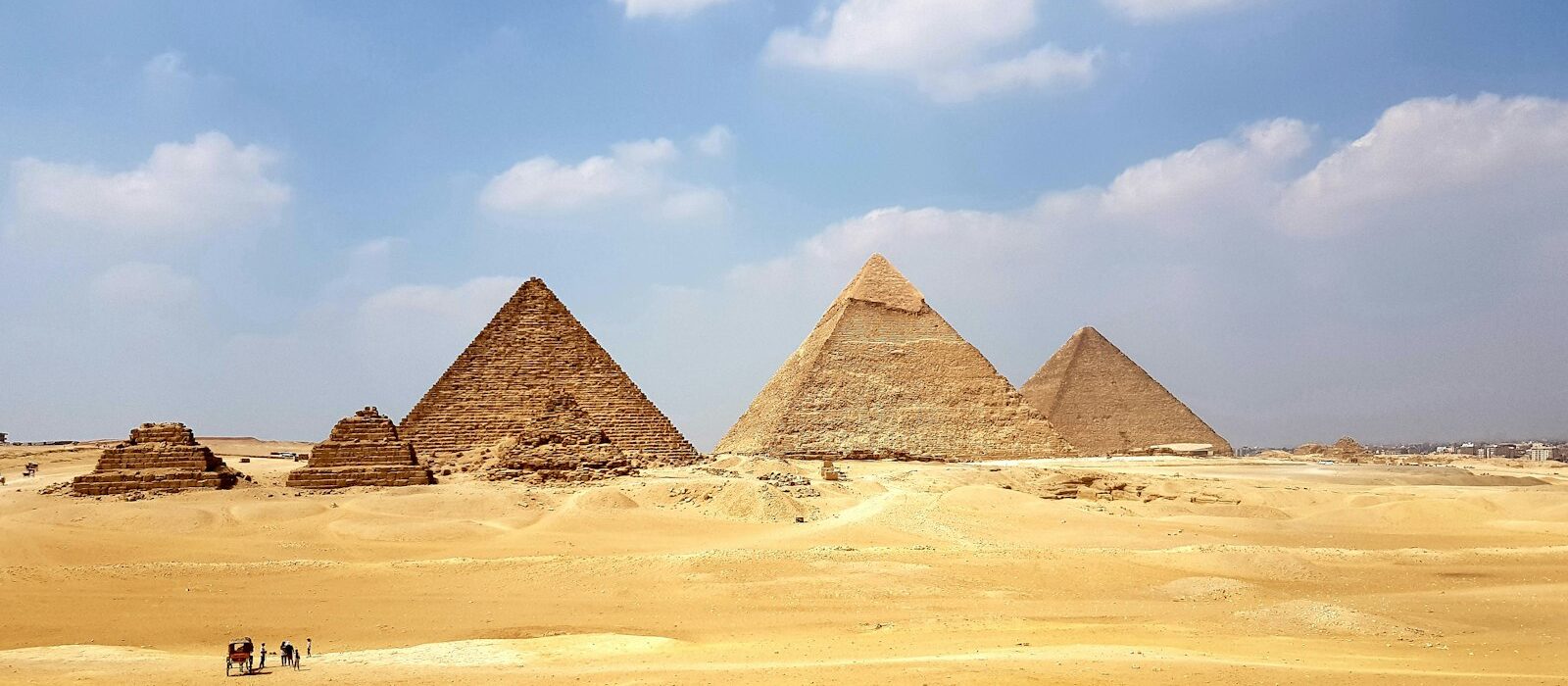
Few countries pack so much into one trip. The Pyramids of Giza and the Grand Egyptian Museum, which opened in November 2025, sit on the edge of Cairo. Upriver, Luxor and Aswan hold temples and tombs that are among the best preserved in the world. On the coast, the Red Sea offers reefs, resorts and desert scenery.
Visitors usually need a visa, and the rules depend on nationality, so start with our Egypt visa guide. Weather shapes the experience more than in most places, which is why we cover the best time to visit Egypt separately. If you want a ready route, our Egypt itinerary ideas show how to link Cairo, Luxor and Aswan sensibly.
Cairo is one of the largest cities in Africa and the Arab world, and its energy defines the country. Alexandria has a cosmopolitan, seaside character, Luxor feels like an open-air museum, and Aswan is slower and more relaxed. Beyond these, Egypt also has a younger tourism story built around diving, desert camping and the Red Sea coast.
Tourism is a major part of the economy, and visitors are generally welcomed warmly. Expect busy sites, persistent sellers at some attractions and a lively street life that rewards patience.
History of Egypt
Egypt’s recorded history stretches back more than 5,000 years, beginning with the unification of Upper and Lower Egypt around 3100 BC. Later periods brought Greek, Roman, Arab, Ottoman and British influence before the modern republic emerged in the 1950s.
Last checked: November 2026
The Old Kingdom produced the pyramids at Giza, built for kings such as Khufu. The New Kingdom, with rulers including Hatshepsut, Tutankhamun and Ramses II, left the great temples of Luxor and Abu Simbel. Alexander the Great arrived in 332 BC, and the Ptolemaic dynasty ended with Cleopatra VII; Egypt then became a Roman province in 30 BC.
Arab forces arrived in 641 AD, and Islam gradually became the dominant faith. The Fatimids founded Cairo in 969, and later the Ayyubids and Mamluks shaped the city’s mosques and citadel. Ottoman rule began in 1517, followed by French occupation under Napoleon in 1798 and the modernising rule of Muhammad Ali from 1805.
The Suez Canal opened in 1869 and Britain occupied Egypt in 1882. Egypt gained formal independence in 1922, became a republic after the 1952 revolution, and in 1970 completed the Aswan High Dam. The uprising of 2011 marked the most recent major political turning point.
Several periods leave visible traces for travellers. The pyramid fields at Giza and Saqqara belong to the earliest great age of stone building. The temples at Karnak, Luxor and Abu Simbel belong to the New Kingdom, when Egypt was at its most powerful. Alexandria recalls the Greek and Roman era, Coptic churches in Old Cairo recall early Christianity, and the mosques, gates and markets of Islamic Cairo recall the medieval centuries. The Grand Egyptian Museum now brings these layers together in one place.
Culture and Traditions of Egypt
Egyptian culture blends ancient heritage, Arab and Islamic traditions and a large Coptic Christian community. Hospitality, family and shared meals are central. Visitors should dress modestly, greet people politely and expect the call to prayer to shape daily rhythm.
Last checked: November 2026
Islam is the majority religion, and Coptic Christianity has deep roots in Egypt, with some of the world’s oldest churches in Old Cairo. Ramadan changes the pace of life: many people fast from dawn to sunset, and evenings become social. Religious holidays such as Eid al-Fitr and Eid al-Adha are widely celebrated, as are Coptic Christmas on 7 January and the spring festival Sham El-Nessim.
Everyday manners matter. A handshake is common between people of the same gender, and visitors should wait for the other person to offer it across genders. Shoes come off in mosques, and covered shoulders and knees are respectful at religious sites. Tipping, known as baksheesh, is a normal part of service.
Egyptian Arabic is heard across Arab cinema and music, and Cairo remains a major cultural centre. Traditions such as tea in a street café, shisha, and shopping in Khan el-Khalili are part of local life. To plan the cultural highlights, see the best places in Egypt.
Egypt is not culturally uniform. Nubian communities around Aswan keep their own language, music and colourful house painting, and Siwa Oasis has its own Amazigh traditions. In villages and towns across the Nile Valley, family ties, weddings and neighbourhood life remain strong. Humour is valued, and conversation is often warm and curious, so small talk with shopkeepers and drivers is part of the experience.
Food and Cuisine of Egypt
Egyptian cuisine is built on bread, beans, rice, vegetables and slow-cooked stews, and much of it is vegetarian. Koshari is the national dish, while ful medames and ta’ameya are everyday breakfast staples. Street food is cheap, filling and central to local life.
Last checked: November 2026
Try these signature dishes:
- Koshari: rice, lentils, pasta and chickpeas topped with spiced tomato sauce and crispy onions.
- Ful medames: slow-cooked fava beans with oil, lemon and cumin.
- Ta’ameya: Egyptian falafel made with fava beans, often served in bread.
- Molokhia: a green leafy stew, usually served with rice and chicken or rabbit.
- Mahshi: vegetables such as vine leaves, courgettes or peppers stuffed with spiced rice.
- Fattah: layers of bread, rice and meat with garlic and vinegar sauce, often served at celebrations.
- Hawawshi: baked bread filled with spiced minced meat.
- Kebda Eskandarani: Alexandria-style fried liver with peppers and spices.
- Aish baladi: the traditional flatbread eaten with most meals.
- Om Ali: a warm dessert of pastry, milk, nuts and raisins.
- Basbousa and kunafa: sweet semolina and shredded-pastry desserts soaked in syrup.
Meals are generous and shared. Tea and fresh juices are served everywhere, and food stalls range from tiny counters to long-established restaurants. If you eat on the street, choose busy places with fresh turnover.
Drinks are part of the food culture too. Sweet black tea is offered almost everywhere, karkade (hibiscus tea) is popular hot or cold, and fresh sugarcane juice is sold by street vendors. Breakfast is often ful and ta’ameya with bread, while the main meal tends to be later in the day, with rice, vegetables and grilled or stewed meat. During Ramadan, long shared tables at sunset are a highlight of local life.
Planning where to sleep after a food tour? See hotels in Egypt, and compare routes in our getting around Egypt guide and flights to Egypt page.
Explore Egypt Travel Guides
Explore our detailed guides to plan every part of your Egypt trip.
Explore Egypt Tours
Discover guided tours and adventures in Egypt. Compare itineraries, prices and traveller reviews on TourRadar before you book.
Guided tours & deals
Affiliate partner · Globe Navo may earn a commission from qualifying bookings at no extra cost to you.
❓ Egypt FAQ
Is Egypt safe for tourists?
Safety depends on where you go. Governments advise against travel to parts of Sinai, the Libya border area and parts of the Western Desert, while Cairo, the Nile Valley and main resorts are outside those zones. Check current official advice before you travel.
What is the capital of Egypt?
The capital is Cairo, a city of tens of millions in its wider metropolitan area. It sits near the head of the Nile Delta, close to the Pyramids of Giza and the Grand Egyptian Museum.
What language is spoken in Egypt?
Arabic is the official language, and Egyptian Arabic is the everyday dialect. English is widely used in hotels, tourist sites and restaurants, and many guides speak other European languages too.
What currency does Egypt use?
Egypt uses the Egyptian pound (EGP). Many tourist sites quote prices in pounds, though some operators price in US dollars or euros, so carry small notes for tips and taxis.
What is Egypt's national dish?
Koshari is widely regarded as the national dish. It combines rice, lentils, pasta and chickpeas with a spiced tomato sauce and crispy fried onions, and costs very little in local eateries.
Plan Your Trip to Egypt
Your Next Adventure in Egypt Awaits!
Explore Deals →🎁 Best deals for Egypt
Offers from trusted travel stores for your Egypt trip. Compare a few options before you book, and check each store's terms for the final price.
Browse by type: Hotel deals · Flight deals · Travel eSIM · Car rental
 SimOptionsFind the latest SimOption promo code and coupon code for travel eSIM data plans. See how to apply an offer at checkout, fix common code errors and stay connected abroad.
Get Coupon View Deal
 TourRadarTourRadar is an online marketplace for multi-day guided tours, small-group trips and tailor-made journeys offered by independent tour operators around the world.
Get Coupon View Deal
More destinations to explore
EcuadorEcuador sits on the equator in north-western South America, spanning Pacific coast, Andes, Amazon…
 Dominican RepublicWhere Is Dominican Republic Located? The Dominican Republic is a Caribbean country that occupies…
 MontenegroMontenegro is an Adriatic country of walled coastal towns, high mountains and canyons, with…