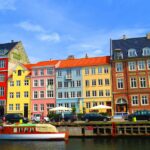
Denmark has a dense, reliable public transport network, flat cycling-friendly landscapes and well-kept roads. Trains link the major cities, while metro, buses and light rail serve urban areas and ferries connect many islands. This guide explains the main options, when each works best and what to check before you travel. Timetables and fares change, so verify them with the official operators linked below. For airport arrival information, see our Denmark flights guide.
What Is the Best Way to Get Around Denmark?
For most visitors, trains are the best way to travel between major cities, while metro, buses and bicycles work best within cities. A rental car helps for rural Jutland and the west coast but is unnecessary in Copenhagen. Plan journeys with the official national planner and book longer train trips ahead for peak dates.
Last checked: November 2026
Trains
DSB operates many of the main intercity services, and other operators run regional lines. Copenhagen to Odense takes roughly an hour and a half by fast train, and Copenhagen to Aarhus about three hours, although times depend on the service. Reservations may be advisable on busy intercity trains. Check the official planner for current times.
Metro, S-Trains, Light Rail and Local Buses
Copenhagen has a driverless metro and a suburban S-train network, plus extensive buses. Aarhus and Odense have light rail lines, and local buses cover towns and rural areas. Fares are zone-based in many regions, and a single ticket or card can often be used across modes.
Tickets and passes
Options include apps, travel cards and tickets from machines or counters. Copenhagen and many regions use zone-based fares, and national journeys can be checked on the official planner. Validate or check in where required, because inspectors issue fines for travelling without a valid ticket. Confirm fare rules on the operator site before travelling.
Intercity Buses and Ferries
Long-distance buses can be cheaper than trains on some routes but may take longer. Many Danish islands are reached by ferry, including popular destinations such as Ærø and Bornholm, which have ferry links with fixed timetables. Check operator websites for current services and booking rules, as schedules vary by season.
Domestic Flights
Denmark is small, so domestic flights are rarely needed. A few routes, such as links to Bornholm, may be useful for island trips. We have not verified a current domestic route list, so check with the airline or airport before planning to fly within Denmark.
Car Rental and Driving Rules
Cars drive on the right-hand side of the road. Dipped headlights are normally required at all times, and seat belts are compulsory. Typical limits are 50 km/h in urban areas, 80 km/h on rural roads and up to 130 km/h on motorways unless signs say otherwise, but always follow posted limits.
Licences from EU and EEA countries are generally accepted, and requirements for other licences depend on the country and licence format. Check with the Danish authorities and your rental company before travelling, and bring an international driving permit if advised. Parking in cities can be expensive and restricted, so confirm rules on signs and apps.
Taxis, Ride-Hailing and Cycling
Licensed taxis are available in cities and can be booked by phone or app. Ride-hailing availability and rules can change, so check the app in your location. Cycling is one of the best ways to explore, with extensive lanes and bike-share or rental options in many cities. Follow local traffic rules, use lights at night and lock your bike.
Which Transport Is Best for Which Journey?
- Copenhagen to Odense or Aarhus: train, for comfort and city-centre arrivals.
- Within a city: metro, bus or bicycle.
- Western Jutland and rural areas: rental car, or train plus local bus if you plan carefully.
- Islands: ferry, with booking in summer.
Common Transport Mistakes
- Travelling without a valid ticket, which can lead to fines.
- Assuming trains run frequently everywhere, especially on weekends and in rural areas.
- Underestimating distances in Jutland.
- Riding or parking a bicycle where it is not permitted.
- Forgetting that many car parks need payment by app or machine.
Travel Checklist
- Check journeys on the official planner before leaving.
- Carry a payment card and have your ticket app ready.
- Allow buffer time for connections and ferries.
- Check weather for coastal and island trips.
- Keep your passport or ID when travelling near borders.
Official Sources
Getting Around Denmark FAQs
Is public transport good in Denmark?
Yes. Cities have frequent metro, bus or train services, and trains link major cities. Rural areas have fewer services, especially at weekends, so check timetables in advance and consider a car for remote regions.
Do I need a car in Denmark?
Not for Copenhagen, Odense or Aarhus. A car is useful for western Jutland, small villages and flexible coastal trips. Parking and fuel can be expensive, so compare costs with trains and local buses.
Which side of the road do they drive on?
Denmark drives on the right-hand side of the road. Dipped headlights are normally required at all times, and speed limits are enforced. Check the rental company and local rules, especially if you are used to driving on the left.
Can I use one ticket for all transport?
Often you can use one ticket or card across modes within a region, but rules vary. Check the operator site or app for your area before you travel, and confirm whether your ticket covers metro, bus and train.
Car Rentals with Klook
Compare car rental options and find a convenient way to explore Denmark. Continue to Klook to check suppliers, prices and availability.
Affiliate partner · Globe Navo may earn a commission from qualifying bookings.