 BeninBenin is a West African country known for Vodun culture, the Royal Palaces of…
DESTINATION
Colombia
Colombia travel guide: where the country is, its history, culture and food.
📅 Last updated:
🌍 Quick Facts

Colombia at a glance
Capital: Bogotá
Currency: Colombian peso (COP)
Language: Spanish
Population: About 52 million (national statistics estimate)
Time zone: UTC-5 (Colombia Time), no daylight saving
Calling code: +57
Internet domain: .co
Main airport: El Dorado International Airport, Bogotá (BOG)
Best time to visit: Varies by region; many travellers favour December to March and July to August in the Andes
📍 Colombia Map
🖼️ Colombia: Location, History, Culture & Food
✨ Complete Travel Guide
Safety Notice: The most recent US State Department advisory we could confirm rates Colombia Level 3 (Reconsider Travel) and was issued on 31 March 2026. The UK FCDO advises against all but essential travel to certain regions, and a magnitude 7.4 earthquake struck western Colombia on 10 August 2026. Risk differs sharply by area, so read the current US travel advisory and UK FCDO travel advice before you book. Our Colombia visa and entry guide covers entry rules.
Where Is Colombia Located?
Colombia is a country in north-western South America and the only one on the continent with coastlines on both the Caribbean Sea and the Pacific Ocean. It borders Venezuela, Brazil, Peru, Ecuador and Panama. The capital, Bogotá, sits high in the Andes at roughly 2,600 metres above sea level.
Last checked: November 2026
The country covers about 1.14 million square kilometres, which makes it one of the larger nations in South America. The Andes enter from the south and split into three mountain ranges, called cordilleras, that run north through the middle of the country. Most large cities lie in the valleys and highland basins between them.
Colombia is usually described in six natural regions:
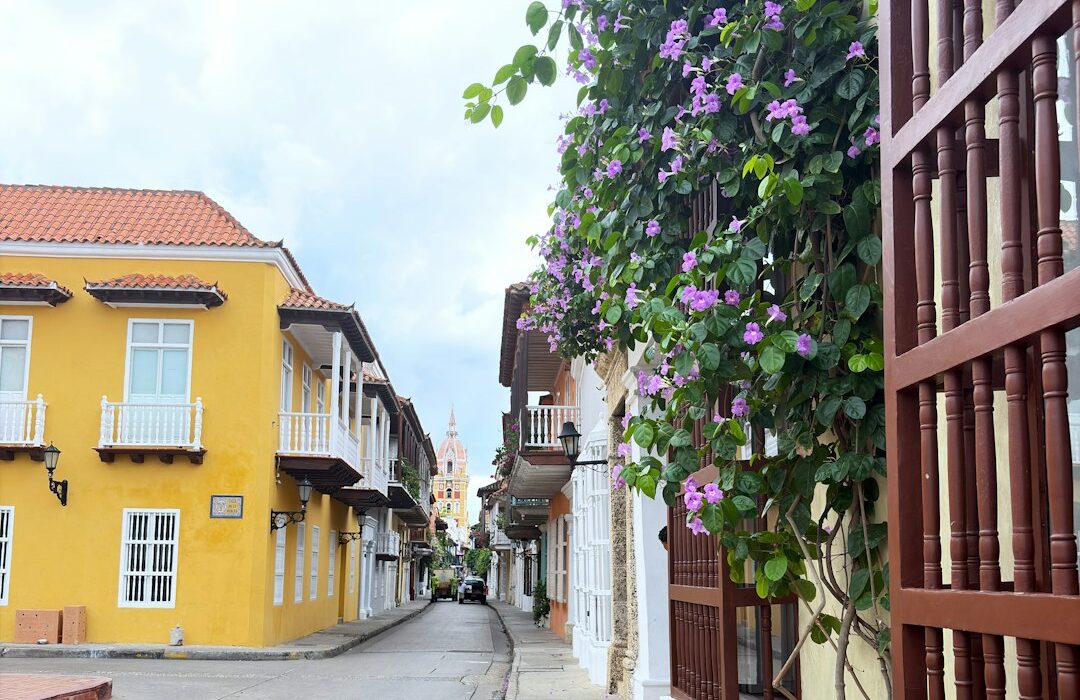
- The Caribbean coast: hot lowlands, beaches and the walled city of Cartagena
- The Pacific coast: rainforest, rivers and a remote, sparsely populated shoreline
- The Andean region: mountains, coffee farms and the cities of Bogotá and Medellín
- The Orinoquía, or Llanos: wide eastern plains used for cattle ranching
- The Amazon: rainforest in the south-east, bordering Brazil and Peru
- The islands, including San Andrés and Providencia in the Caribbean
Colombia uses Colombia Time (UTC-5) all year and does not observe daylight saving. Distances can look short on a map, but mountain roads are slow, so read our guide to getting around Colombia before you plan a route.
Introduction to Colombia
Colombia is a presidential republic known for coffee, Caribbean beaches, colonial cities, Andean scenery and exceptional biodiversity. Spanish is the official language, the Colombian peso (COP) is the currency and Bogotá is the capital. Roughly 52 million people live in the country, according to national statistics estimates.
Last checked: November 2026
The country is divided into 32 departments plus the Capital District of Bogotá. Medellín, Cali, Barranquilla and Cartagena are other major cities, and each has its own character. You can follow official population data on the DANE national statistics website.
Colombia is among the most biodiverse countries on Earth, with cloud forest, high-altitude páramo, Amazon rainforest, desert and coral reefs. UNESCO lists several sites here, including the Port, Fortresses and Group of Monuments of Cartagena and the Coffee Cultural Landscape of Colombia. Browse the full list on the UNESCO World Heritage page for Colombia, and see our best places to visit in Colombia for ideas.
The international calling code is +57 and the internet domain is .co. Entry rules depend on your nationality, so start with our Colombia visa guide for tourists. Then compare airports and routes in our guide to flights to Colombia.
History of Colombia
Colombia’s history runs from early Indigenous societies such as the Muisca and Tairona, through Spanish colonial rule that began in the early 1500s, to independence in 1819 under Simón Bolívar. The modern republic took shape during the nineteenth century, and the country adopted its current constitution in 1991.
Last checked: November 2026
Indigenous Peoples and Spanish Conquest
Many Indigenous peoples lived in the area long before Europeans arrived. The Muisca of the Andean highlands and the Tairona of the Caribbean coast built farming societies and worked gold, and the stories of their goldwork fed the European legend of El Dorado. Spanish settlement began in the early 1500s, and Cartagena was founded in 1533 and Bogotá in 1538.
The Spanish ruled the region as part of the Viceroyalty of New Granada, with Bogotá as a major administrative centre. Colonial streets, churches and fortresses survive today in Cartagena, Popayán, Mompox and the Candelaria district of Bogotá.
Independence and the Early Republic
A cry for self-government in Bogotá on 20 July 1810 is celebrated as Independence Day. Simón Bolívar’s army won the decisive Battle of Boyacá on 7 August 1819, and the new state of Gran Colombia briefly joined what are now Colombia, Venezuela, Ecuador and Panama. Gran Colombia broke apart in 1830 and 1831, and the country took the name Colombia, in honour of Christopher Columbus, in the constitution of 1886. Panama separated in 1903.
The Twentieth Century and Today
The assassination of the politician Jorge Eliécer Gaitán in Bogotá on 9 April 1948 set off riots and a long period of political violence. Armed conflict involving guerrilla groups, paramilitaries and drug-trafficking organisations shaped much of the following decades. The government and the FARC guerrillas signed a peace agreement in 2016, although violence continues in some regions. Our Colombia itineraries show how visitors fit the main historical sites into one trip.
Culture and Traditions of Colombia
Colombian culture blends Indigenous, Spanish and African traditions, with strong regional identities. Spanish is spoken everywhere, Catholicism shapes many festivals, and music from vallenato to salsa and cumbia is part of daily life. Warm hospitality, close family ties and lively street celebrations define how Colombians welcome visitors.
Last checked: November 2026
Language and Everyday Etiquette
Accents and vocabulary change from region to region. People on the Caribbean coast speak quickly and informally, while Bogotá is known for a more formal style. Greeting people with a handshake and a polite buenos días is expected in shops, taxis and guesthouses, and many Colombians use the formal usted with strangers and older people.
Festivals and Celebrations
Dates change each year, so confirm them on each festival’s official website:
- Carnaval de Barranquilla, held before Lent, with parades, costumes and music
- Festival de la Leyenda Vallenata in Valledupar, usually in April
- Semana Santa processions in Popayán and Mompox
- Feria de las Flores in Medellín, held in August
- Independence Day on 20 July and the Battle of Boyacá holiday on 7 August
- Día de las Velitas on 7 December, when families light candles to start the Christmas season
Big festivals fill hotels early. Our best time to visit Colombia guide explains how seasons and holidays affect crowds.
Music, Arts and Sport
Vallenato from the north, cumbia and champeta from the Caribbean coast and salsa from Cali are the best-known sounds. Gabriel García Márquez won the Nobel Prize in Literature in 1982, and the painter and sculptor Fernando Botero is known worldwide for his rounded figures. Football is the most popular sport, cycling has a devoted following in the Andes, and tejo, a game that involves throwing a metal disc at small targets, is a national tradition.
Food and Cuisine of Colombia
Colombian food is hearty and regional, built around corn, potatoes, plantain, rice, beans, tropical fruit and slow-cooked meat or fish. Signature dishes include bandeja paisa, ajiaco, arepas and empanadas. Coffee, fresh juices and sweets such as arequipe complete a cuisine that changes noticeably from the Andes to the coasts.
Last checked: November 2026
Regional differences are strong. The Andean highlands favour soups, potatoes and grilled meats, while the Caribbean coast uses coconut, fish and fried plantain. The Pacific coast is known for seafood and Afro-Colombian recipes, and the eastern plains are known for grilled beef. Vegetarian options exist in cities, but meat features in many traditional dishes, so ask about ingredients if you avoid it.
Signature Dishes
- Bandeja paisa: a large platter of beans, rice, minced meat, fried pork belly, egg, plantain and avocado from the Medellín region
- Ajiaco santafereño: a chicken and potato soup from Bogotá, served with corn, cream and capers
- Arepas: grilled or fried corn cakes eaten at breakfast and with most meals
- Empanadas: fried corn pastries filled with meat or potato, served with ají sauce
- Sancocho: a hearty soup of meat or fish with plantain, yuca and corn
- Lechona: slow-roasted pork stuffed with rice and peas, a specialty of Tolima
- Tamales: corn dough parcels with meat and vegetables wrapped in banana leaf
- Arroz con coco: coconut rice served with fish on the Caribbean coast
- Pandebono: soft cheese bread made with cassava starch
- Buñuelos: fried cheese dough balls often eaten at Christmas
Drinks and Sweets
Colombia is famous for coffee, and a small black tinto is served everywhere. Fresh juices from fruits such as lulo, maracuyá and guanábana are common, and aguapanela is a hot drink made from unrefined cane sugar. Aguardiente, an anise-flavoured spirit, is the traditional party drink, and sweets include arequipe, a milk caramel, and obleas, thin wafers filled with it.
Street food is part of the experience, and busy stalls with a quick turnover are usually the safest choice. Choose a base near good restaurants with the help of our guide to where to stay in Colombia.
Explore Colombia Travel Guides
Explore our detailed guides to plan every part of your Colombia trip.
Explore Colombia Tours
Discover guided tours and adventures in Colombia. Compare itineraries, prices and traveller reviews on TourRadar before you book.
Guided tours & deals
Affiliate partner · Globe Navo may earn a commission from qualifying bookings at no extra cost to you.
❓ Colombia FAQ
Where is Colombia located?
Colombia is in north-western South America, bordering Venezuela, Brazil, Peru, Ecuador and Panama. It has coastlines on both the Caribbean Sea and the Pacific Ocean, and the Andes mountains run through the centre of the country. Its capital, Bogotá, lies at about 2,600 metres above sea level.
What is the capital of Colombia and what language is spoken?
Bogotá is the capital and largest city. Spanish is the official language and is spoken throughout the country, with Indigenous and Creole languages used in some regions. English is more common in tourist areas and larger hotels than in smaller towns, so a few Spanish phrases help.
What currency does Colombia use?
Colombia uses the Colombian peso, abbreviated COP. Cash is useful in small towns and markets, while cards are widely accepted in cities and larger hotels. Check exchange rates close to your travel dates, since they change daily, and confirm any fees with your bank before you travel.
What is Colombia known for?
Colombia is known for its coffee, Caribbean and Pacific coastlines, colonial Cartagena, Andean cities, biodiversity and music such as vallenato and salsa. Culture and food vary strongly by region, from the arepas and bandeja paisa of the Andes to the coconut rice and seafood of the Caribbean coast.
What time zone is Colombia in?
Colombia uses Colombia Time, which is UTC-5 all year. The country does not observe daylight saving time, so the gap with Europe and North America changes when their clocks change. Check the difference from your home before booking calls or flight connections.
Plan Your Trip to Colombia
Your Next Adventure in Colombia Awaits!
Explore Deals →🎁 Best deals for Colombia
Offers from trusted travel stores for your Colombia trip. Compare a few options before you book, and check each store's terms for the final price.
Browse by type: Hotel deals · Flight deals · Travel eSIM · Car rental
 SimOptionsFind the latest SimOption promo code and coupon code for travel eSIM data plans. See how to apply an offer at checkout, fix common code errors and stay connected abroad.
Get Coupon View Deal
 TourRadarTourRadar is an online marketplace for multi-day guided tours, small-group trips and tailor-made journeys offered by independent tour operators around the world.
Get Coupon View Deal
More destinations to explore
BeninBenin is a West African country known for Vodun culture, the Royal Palaces of…
 LebanonA Lebanon overview covering its Mediterranean location, Phoenician-to-modern history, culture, traditions and signature dishes,…

 KazakhstanExplore Kazakhstan, the vast Central Asian country of steppe, mountains and Silk Road heritage,…