 Malaysia
DESTINATION
Albania
From Skanderbeg to Bunk'Art, and from besa to byrek, this Albania travel guide introduces the country's history, culture and food before you go.
📅 Last updated:
Albania: Hotels · Flights · Visa Guide · Deals
🌍 Quick Facts

Albania at a glance
🏛️
Capital: Tirana
💱
Currency: Albanian lek (ALL)
💬
Language: Albanian (Shqip)
👥
Population: About 2.34 million (2026)
🕒
Time zone: Central European Time (UTC+1), with daylight saving time in summer
📞
Calling code: +355
🌐
Internet domain: .al
✈️
Main airport: Tirana International Airport (TIA)
★
Best time to visit: May to June and September to early October
Food
- Byrek
- Tavë kosi
- Fërgesë
- Qofte
- Stuffed peppers
- Trileçe
- Baklava
- Raki
Places
- Berat
- Gjirokastër
- Butrint
- Bunk'Art 1, Tirana
- Krujë
- Albanian Riviera
- Theth and Valbona
- Blue Eye (Syri i Kaltër)
Weather
Mediterranean climate with hot, dry summers and mild, wet winters. Inland areas can pass 30°C in July and August. The Albanian Alps get snow in winter.
Culture
Besa (keeping your promise) and the Kanun customary law. Hospitality is central, and guests are traditionally given the best seat and the best food. Religious tolerance is a core value. Espresso and Turkish-style coffee are part of daily life, and UNESCO recognizes Albanian folk iso-polyphony.
Cities
- Tirana
- Durrës
- Vlorë
- Shkodër
- Berat
- Gjirokastër
- Sarandë
- Krujë
📍 Albania Map
📷 Photos of Albania
Explore Albania Travel Guides
Explore our detailed guides to plan every part of your Albania trip.
🗺️
Albania: Itineraries
Plan your trip with Albania itineraries for 3, 5, 7 and 10 days, with realistic driving times and simple routes from Tirana...
View Guide › 📍Albania: Best Places
From Berat's thousand windows to the beaches of the Riviera and the peaks of Theth, here are the best places to visit...
View Guide › 🚆Albania: Getting Around
Getting around Albania by car, bus, furgon, ferry and taxi, with travel times between cities and tips to avoid common mistakes.
View Guide › 🛂Albania: Visa
Find out who needs a visa for Albania, how to apply for the e-visa, passport rules, stay limits and current travel advisories.
View Guide › 🌤️Albania: Best Time to Visit
The best time to visit Albania is May to June or September to early October. See which months suit beaches, Alpine hiking,...
View Guide › ✈️Albania: Flights
Flights to Albania mostly land in Tirana. Learn which airlines fly there, what entry rules to check, when to go, and where...
View Guide › 🛌Albania: Hotels
Where to stay in Albania: compare Tirana, Berat, Gjirokastër, the Riviera and the Alps, with the best base for each kind of...
View Guide ›🖼️ Albania: Location, History, Culture & Food
✨ Complete Travel Guide
Where Is Albania Located?
Albania is a country in Southeast Europe, on the western side of the Balkan Peninsula. It borders Montenegro, Kosovo, North Macedonia and Greece, and its coast faces the Adriatic and Ionian seas. This Albania travel guide starts with the map, because the country’s small size shapes how people travel in it.
Last checked: November 2026
Tirana, the capital, sits in the center of the country, a short drive inland from the port of Durrës. Albania covers about 28,748 square kilometers, which makes it a little smaller than Belgium. Italy lies across the Strait of Otranto, roughly 72 km away at the narrowest point.
Mountains define the map. The Albanian Alps, also called the Accursed Mountains, rise in the north, and Mount Korab on the North Macedonian border is the highest peak at 2,764 meters. The Vjosa River runs from Greece to the Adriatic and was declared a wild river national park in 2023. Lake Shkodër is shared with Montenegro, Lake Ohrid with North Macedonia, and Lake Prespa with North Macedonia and Greece.
The coast has two faces. North of Vlorë, the Adriatic shore is low and sandy, with long beaches near Durrës. South of Vlorë, the Ionian coast turns steep and rocky, with the Llogara Pass above it and small coves below. The climate is Mediterranean, with hot, dry summers and mild, wet winters, and our best time to visit Albania guide explains how it changes by month and region.
Albania uses Central European Time (UTC+1), and clocks move forward one hour in summer. Distances look short on a map, but mountain roads are slow. Read the getting around Albania guide for realistic travel times, and use the Albania itineraries to group places by region.
Albania Travel Guide: What the Country Is Known For
Albania is known for Ottoman-era stone towns, ancient ruins, a long Mediterranean coast and a strong tradition of hospitality. The official language is Albanian, the currency is the lek, and the country is a parliamentary republic. This introduction explains what shapes the country today, so the places and customs you meet make more sense.
Albania had about 2.34 million residents on 1 January 2026, according to the national statistics office, INSTAT. That figure covers the whole country, not one city, and it has fallen in recent years. Tirana prefecture holds roughly a third of all residents.
Three things make Albania distinctive. Its Ottoman-era towns are still lived in, not preserved as museums, and sit near ancient sites such as Butrint. The country spent decades closed to the outside world, which still shows in its bunkers, museums and public squares. And its Ionian coast has small coves and fishing towns beside the busier beach resorts.
UNESCO lists several places here. Butrint was inscribed in 1992, and the historic centers of Gjirokastër (2005) and Berat (2008) form one listing. Albania’s share of the Ohrid region was added in 2019, and parts of its forests joined the transnational beech forests listing in 2017. The full list is on the UNESCO page for Albania.
For a sorted list of sights, see the best places to visit in Albania. Most visitors use two or three bases, and where to stay in Albania compares them. Entry rules depend on nationality, so read the Albania visa guide before booking, and see flights to Albania for airports and airlines.
A Short History of Albania
Albania’s history runs from Illyrian tribes and Greek colonies to Roman rule, four centuries under the Ottoman Empire, independence in 1912 and nearly half a century of communist isolation. Each era left something visitors can see today, from ruins at Butrint to stone houses in Gjirokastër and bunkers in the hills.
Illyrians, Greeks and Romans
Illyrian tribes lived in the western Balkans long before modern Albania existed. Greek colonists founded Epidamnos in the 7th century BC, which later became Dyrrhachium and is now Durrës, and Apollonia followed soon after. Rome defeated the Illyrian king Gentius in 168 BC and built the Via Egnatia, a road that began on this coast and ran east across the Balkans. Byzantine rule and a patchwork of medieval principalities came next.
Skanderbeg and Ottoman Rule
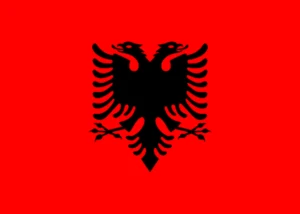
Ottoman forces took most of the country in the 15th century, and Ottoman rule lasted until 1912. One name stands out from the early years: Gjergj Kastrioti, known as Skanderbeg. In 1443 he left Ottoman service, took control of Krujë and led a long resistance until his death in 1468. Krujë fell to the Ottomans in 1478. Albanians honor him as their national hero, and the black double-headed eagle on a red field, his family’s emblem, is still on the national flag.
Under Ottoman rule many Albanians converted to Islam, and towns such as Berat and Gjirokastër took the stone-and-whitewash look that visitors see today. Independence came on 28 November 1912, when Ismail Qemali declared it in Vlorë.
Kingdom, War and Communism
Albania became a kingdom under Zog I in 1928, and Italy invaded in April 1939. After World War II the communist leader Enver Hoxha ruled until his death in 1985, and the country cut ties with most of the world. Fearing an invasion that never came, the regime built concrete bunkers across the land. Commonly cited estimates are about 173,000, though counts vary.
Some bunkers are now cafés or galleries. Bunk’Art 1, a former nuclear shelter near Tirana, and Bunk’Art 2, which opened in the city center in 2016, are museums. Check each museum’s official website for current hours before you go.
Since 1991
Communist rule ended between 1990 and 1992, as multiparty politics returned. Albania joined NATO in April 2009 and became a European Union candidate in June 2014. Accession talks opened in July 2022, and by October 2026 Albania had opened all 33 negotiating chapters and provisionally closed four, according to the Council of the European Union. Nothing is final until the whole process ends, so membership remains a future step.
Albanian Culture, Language and Customs
Albanian culture centers on family, hospitality and a code of honor called besa. Albanian is the official language, and Muslim, Orthodox and Catholic communities live side by side. Music, crafts and café life shape everyday routines, and many customs come from village and mountain traditions.
Language
Albanian forms its own branch of the Indo-European family and uses 36 letters. Two main dialects exist, Gheg in the north and Tosk in the south, and the standard language is based on Tosk. Locals call the language Shqip and the country Shqipëria. English is often spoken by younger people, and Italian is widely understood. Faleminderit means thank you.
Religion
Religious practice was banned under communism from 1967 until 1990, and it returned in the 1990s. Muslims form the largest group today, alongside Orthodox and Catholic Christians and the Bektashi, a Sufi Muslim order whose world headquarters are in Tirana. The communities have generally coexisted peacefully, and Albanians often cite this tolerance with pride.
Festivals and Holidays
Public holidays include Summer Day on 14 March, Independence Day on 28 November and Liberation Day on 29 November. Eid al-Fitr, Eid al-Adha and both Catholic and Orthodox Easter are public holidays too, and their dates move each year. Many shops and offices close on these days, so check dates before you travel.
Etiquette
Hospitality is a point of pride. Accepting a coffee, a snack or a glass of raki is polite, and hosts often insist on a second serving. In some regions people shake the head from side to side for yes and tip it back for no, so ask for a spoken answer when it matters. Dress modestly in mosques and churches, and remove your shoes if asked.
Music and Arts
Albanian folk iso-polyphony, a style of group singing from the south, is on UNESCO’s Representative List of the Intangible Cultural Heritage of Humanity. Traditional instruments include the çifteli, a two-stringed instrument, and the lahuta, a one-stringed instrument from the northern highlands. In literature, Ismail Kadare, who died in 2024, is the country’s best-known writer abroad, and he won the first Man Booker International Prize in 2005. Everyday life also revolves around cafés and the evening stroll, called xhiro.
Albanian Food and Drink
Albanian food mixes Mediterranean, Balkan and Ottoman influences. Meals rely on seasonal vegetables, olive oil, yogurt, cheese, lamb and fresh bread, and they are usually less spicy than food in neighboring Turkey. Regional differences matter: the coast leans on fish and olive oil, while the mountains favor dairy, corn and grilled meat.
Staples
Bread comes with almost every meal, along with white cheese, yogurt called kos, tomatoes, cucumbers, olives and peppers. Mountain tea, called çaj mali, is a common hot drink. Vegetarians do well, because many traditional dishes rely on vegetables, pastry and cheese.
Signature Dishes
These ten dishes are a good place to start:
- Byrek: flaky layered pastry filled with cheese, spinach or meat.
- Tavë kosi: baked lamb and rice under a yogurt and egg topping, often called the national dish.
- Fërgesë: baked peppers, tomatoes and white cheese, sometimes with meat or liver.
- Qofte: grilled, seasoned meatballs served with bread and salad.
- Speca të mbushur: peppers stuffed with rice, herbs or meat.
- Japrak: vine leaves rolled around rice and herbs.
- Qifqi: fried rice balls with herbs, a specialty of Gjirokastër.
- Flija: thin pancake layers baked slowly under a lid and served with yogurt.
- Tarator: a cold cucumber, garlic and yogurt dip or soup.
- Grilled fish: sea bream, sea bass and mussels along the coast.
Street Food
Bakeries sell byrek by the slice at any hour, and grill stands serve qofte and qebapa, small grilled sausages of minced meat. Petulla, a fried dough, is a popular snack, often topped with powdered sugar or white cheese.
Drinks
Raki, a strong grape or fruit spirit, is the traditional drink and is often homemade. Albanians drink espresso and Turkish-style coffee all day, and dhallë, a salted yogurt drink, goes well with byrek. Wine comes from local grapes such as Shesh i Zi and Kallmet, and Korça is a well-known beer.
Desserts
Baklava and kadaif come from Ottoman tradition. Trileçe is a sponge cake soaked in three kinds of milk, and sheqerpare is a soft, syrupy biscuit. Ballokume, a soft cornmeal biscuit from Elbasan, is linked with Summer Day.
Explore Hotels & Flights
Search accommodation and flights for your destination with Expedia. Compare available options and continue to Expedia to complete your booking.
Affiliate partner · Globe Navo may earn a commission from qualifying bookings at no extra cost to you.
❓ Albania FAQ
Which languages will I hear in Albania?
Albanian is the official language. English, Italian and Greek are also spoken, so you can usually manage in cities and tourist areas even without Albanian.
Since when has Tirana been the capital?
Sulejman Pasha founded Tirana in 1614, and it became the capital in 1920. Before that, other cities, such as Shkodër, held more weight.
What is Summer Day in Albania?
Summer Day, called Dita e Verës in Albanian, is a public holiday on 14 March. It marks the start of spring, and many people spend the day outdoors. The city of Elbasan is traditionally linked with the holiday and with ballokume biscuits.
What is the Blue Eye (Syri i Kaltër)?
It is a turquoise spring near Sarandë, more than 50 meters deep. It gets long queues in midsummer, so spring or autumn is calmer.
Can I visit the Albanian Alps in winter?
Snow is common there, and the area suits winter sports. Hiking routes such as Theth-to-Valbona are best kept for late spring to early autumn.
Plan Your Trip to Albania
Your Next Adventure in Albania Awaits!
Explore Deals →🎁 Best deals for Albania
Offers from trusted travel stores for your Albania trip. Compare a few options before you book, and check each store's terms for the final price.
Browse by type: Hotel deals · Flight deals · Travel eSIM · Car rental
 KkdayFind current Kkday coupons and deals for tours, attraction tickets, transport and first app orders. See minimum spend, discount caps and exclusions before you book.
Get Coupon View Deal
 eSIMFOXeSIMFOX is a travel eSIM provider offering prepaid mobile data plans for single countries and wider regions, delivered digitally so you can connect as soon as you land.
Get Coupon View Deal
 QuibityQuibity is a travel eSIM provider that lets you buy a mobile data plan online and activate it on your phone, so you can get connected abroad without a physical SIM card.
Get Coupon View Deal
 ExpediaDiscover great deals on hotels, flights, vacation packages, car rentals, and activities with Expedia. Compare travel options and plan your next trip with convenient booking choices.
Get Coupon View Deal
 KlookKlook is a travel activities platform where you can book attraction tickets, tours, day trips, transport passes, airport transfers and local experiences in destinations worldwide.
Get Coupon View Deal
 Trip.comTrip.com is a global online travel platform for flights, hotels, train tickets, airport transfers, attraction tickets and travel packages, available on web and mobile app.
Get Coupon View Deal
 TourRadarTourRadar is an online marketplace for multi-day guided tours, small-group trips and tailor-made journeys offered by independent tour operators around the world.
Get Coupon View Deal