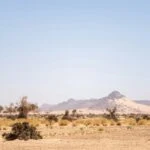
Quick answer. Mauritania’s best places are its landscapes and old desert towns: Banc d’Arguin National Park for birds, Chinguetti and Ouadane for stone heritage, the Richat Structure for geology, Terjit for an oasis, and Nouakchott and Nouadhibou for city life. Access depends on current security advice, so check official warnings before choosing any route.
Last checked: November 2026
Safety Notice. The UK FCDO advises against all travel to parts of Mauritania, including areas in the east and within 25 km of the Mali border, and the US State Department rates the country Level 3, Reconsider travel. Advice for the Adrar, Tagant and border regions has been revised several times, so confirm the latest map on the UK FCDO page and the US State Department page before booking. Sources checked: November 2026.
How to Choose Where to Go
Mauritania is huge and thinly populated, so a good plan picks one or two areas rather than trying to see everything. The popular circuit combines the coast around Nouakchott and Banc d’Arguin with the Adrar plateau inland. Travel between them takes hours on rough roads, and many visitors use a local driver or an organised tour because services outside the towns are limited.
The places below are grouped by type. Suggested times are planning estimates, not official figures, and they assume you are already in the nearest base town.
Natural Wonders and National Parks
Banc d’Arguin National Park
Why visit: this park on the Atlantic coast covers roughly 12,000 square kilometres of dunes, mudflats, shallow waters and small islands, and UNESCO inscribed it in 1989. It is known for huge numbers of migratory waders and other birds, and for the Imraguen fishing villages along its shore.
Main attractions: birdwatching, boat trips between islands, beaches and traditional fishing communities such as Iwik. Time needed: one to two days. Best for: bird lovers, photographers and travellers who like quiet, simple coastal stays. Access: the park is usually reached by 4×4 with a guide, and entry arrangements can change, so confirm with a local operator.
Richat Structure
Why visit: the Richat Structure, also called the Eye of the Sahara, is a ring-shaped geological formation in the Adrar plateau that is clearly visible from space. Estimates of its width range from about 40 to 50 kilometres. On the ground you see layered rock ridges and wide desert views rather than a single viewpoint.
Main attractions: sunrise and sunset over the rings, rock formations and nearby desert camps. Time needed: a full day from Ouadane or Atar. Best for: geology fans and desert photographers. Access: reached by 4×4 on tracks, usually with a driver. Check the current advisory for the area before you commit.
Terjit Oasis
Why visit: Terjit is a palm-lined canyon oasis in the Adrar where water pools sit between rock walls. It is a cooling stop after dusty drives and a popular base for short walks.
Main attractions: natural pools, palm groves and canyon scenery. Time needed: half a day or an overnight stop. Best for: families and travellers who want shade and an easy introduction to the plateau. Access: usually by road from Atar, and conditions vary after rain.
Ben Amira Monolith
Why visit: Ben Amira is a huge granite dome rising from the desert plain, often described as one of the largest monoliths in the world. Tour operators include it on routes between the coast and the Adrar.
Time needed: a few hours as a stop on a longer drive. Best for: travellers who enjoy remote scenery. Access: through a guide and 4×4, because tracks are not signposted.
Historic and Cultural Places
Chinguetti
Why visit: Chinguetti was a caravan town and a centre of Islamic learning, and it is part of the Ancient Ksour of Ouadane, Chinguetti, Tichitt and Oualata UNESCO site. Its old stone quarter and family manuscript libraries show how scholarship moved along desert routes.
Main attractions: the old mosque, the library visits arranged through local families and the surrounding dunes. Time needed: one full day, ideally one night. Best for: history lovers. Access: via Atar by road, with limited facilities in town.
Ouadane
Why visit: Ouadane is a smaller, quieter ksar where ruined stone houses climb a hillside above a palm-filled valley. It was another important caravan stop and is also part of the Ancient Ksour listing.
Main attractions: the ruins of the old town, nearby rock art and views toward the Richat Structure. Time needed: half a day to one night. Best for: travellers who like ruins and silence. Access: by 4×4 from Atar, roughly 90 kilometres by one tour operator’s description.
Tichitt and Oualata
Why visit: these two ksour in the south-east are part of the same UNESCO listing and show older stone-built Saharan settlements. They are remote and lie in regions covered by official advice against travel, so most visitors skip them. Check current advisories and do not plan a visit without up-to-date local guidance.
Major Cities
Nouakchott
Why visit: the capital is where most journeys begin, and it holds the national museum, craft markets and a lively beachfront fish market. It is a working city rather than a resort, with sand-blown streets and a relaxed pace.
Time needed: one to two days. Best for: first-time visitors who want a sense of daily life, shopping and local food. Access: all international flights arrive nearby.
Nouadhibou
Why visit: Nouadhibou is the second city and main fishing port, on a peninsula near the Western Sahara border. It is the starting point for the famous iron ore train and for trips to Cap Blanc, where monk seals have been reported along the cliffs.
Time needed: one to two days. Best for: rail fans and anyone linking the coast with the Adrar by train. Access: by domestic flight or long drive, and parts of the peninsula and the road from Nouakchott lie in zones covered by official warnings, so confirm routes in advance.
Atar
Why visit: Atar is the market town and gateway for the Adrar. It has the shops, fuel and tour operators you need before heading to Chinguetti, Ouadane or Terjit.
Time needed: one night. Best for: travellers preparing a desert trip.
Food and Experiences
Food stops are simple. Look for grilled fish by the sea, mint tea in every town and shared platters in guesthouses. Our Mauritania travel guide covers the main dishes. The Imraguen fishing communities and desert camps are the best places to see local traditions in a respectful, guided way.
The Iron Ore Train Experience
The iron ore train runs between Nouadhibou, Choum and Zouérat and takes passengers in a basic carriage on some departures. It is a rugged journey, not a comfortable scenic train, and riding on ore wagons is discouraged for safety reasons. Choose a carriage seat, bring warm clothes and water, and confirm the current service with a local operator.
Frequently Asked Questions
What is the single best place to visit in Mauritania?
There is no official ranking, but Banc d’Arguin and the Adrar towns are the most commonly recommended. Pick based on interest: birds and coast, or desert heritage. Check current advisories before choosing any route.
Is the Richat Structure easy to visit?
It is reachable only by 4×4 on desert tracks, usually from Ouadane or Atar with a local driver. There is no ticketed visitor centre, so go with a guide and confirm the area is open under current advisories.
How many days do I need to see the highlights?
Plan about seven days to combine Nouakchott, Banc d’Arguin and the Adrar towns without rushing. Shorter trips can focus on a single region. Long drives take much of each day, so avoid packing in too many stops.
Do I need a guide to visit these places?
Most visitors hire a local driver or join a tour because tracks are unmarked, services are limited and some areas are restricted. A guide also helps with checkpoints, permits and cultural etiquette.
Related Guides
Read the Mauritania travel guide for background, then check Mauritania visa requirements, the best time to visit Mauritania, sample Mauritania itineraries, where to stay in Mauritania, flights to Mauritania and how to get around Mauritania.