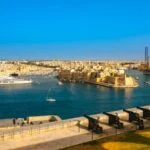
Malta has a Mediterranean climate with hot, dry summers and mild, wetter winters, so the best time to go depends on whether you want beaches, sightseeing, festivals or quiet streets. This guide breaks the year down by season and month.
Quick answer: The best time to visit Malta is generally late spring (May and June) and early autumn (September and October), when days are warm, the sea is comfortable and crowds are smaller than in July and August. Winter is mild but wetter, and midsummer is hot, dry and busiest.
Last checked: November 2026
Malta’s climate at a glance
Malta receives roughly 543 mm of rain a year, mostly between October and March, with an average annual temperature of around 19.5°C, according to 1991-2020 normals reported from the National Statistics Office. August is typically the hottest month, and January and February are the coolest. Sea temperatures range from about 15°C in February to about 26°C in August.
The islands are small, so regional differences are modest. Coastal areas feel breezier, and inland places such as Mdina can feel warmer on still summer days. Gozo and Comino follow the same overall pattern as the main island.
Month-by-month conditions
The figures below are long-term averages for Malta compiled by a weather data site from the Met Office, the Netherlands meteorological institute and the University of East Anglia, so treat them as a guide rather than a forecast.
| Month | Rainfall (mm) | Sea temp (°C) | What to expect |
|---|---|---|---|
| January | 80 | 16 | Cool and wet; quiet sightseeing |
| February | 55 | 15 | Cool; Carnival season |
| March | 37 | 15 | Milder, longer days |
| April | 20 | 16 | Pleasant for walking and Easter events |
| May | 7 | 18 | Warm, dry, good for sightseeing |
| June | 3 | 22 | Hot and sunny; swimming begins |
| July | 0 | 25 | Hot, dry and busy |
| August | 6 | 26 | Hottest month; peak crowds |
| September | 36 | 26 | Warm sea, fewer crowds |
| October | 86 | 24 | Warm sea but changeable weather |
| November | 70 | 21 | Cooler and wetter |
| December | 99 | 18 | Wettest month; festive season |
Seasons and travel styles
Spring (March to May)
Daytime highs typically range from about 17°C to 23°C, which suits walking in Valletta, Mdina and the temples. The sea is still cool, so spring is better for sightseeing than swimming.
Summer (June to August)
Highs generally range from about 27°C to 31°C, with August sometimes reaching 31-32°C. This is the season for beaches, boat trips and Comino, and also the most crowded and expensive time, so book accommodation early.
Autumn (September to November)
The sea stays warm into October, which makes September a favourite for swimming without peak-season crowds. Rain becomes more likely from October.
Winter (December to February)
Winters are mild compared with northern Europe but can be windy and wet. It is a good time for museums, cultural sites and lower prices, but not for beach holidays.
Festivals and public holidays
Malta’s festa season runs from spring to early autumn, with around 80 village feasts across Malta and Gozo, and Carnival takes place before Lent. National public holidays include Freedom Day on 31 March, Sette Giugno on 7 June, Santa Marija on 15 August, Victory Day on 8 September, Independence Day on 21 September and Republic Day on 13 December. Check the Visit Malta festivals calendar for current event dates. Because Malta has a largely Catholic calendar, Ramadan does not affect opening hours in the way it does in Muslim-majority countries.
Packing advice
- Summer: light clothing, sunscreen, a hat, swimwear and sturdy sandals for rocky coves.
- Spring and autumn: light layers, a jacket for evenings and comfortable walking shoes.
- Winter: a waterproof jacket, warm layers and an umbrella.
Best season by travel style
- Beach holidays: June to September.
- Sightseeing and walking: April, May, late September and October.
- Diving: late spring to autumn, when the sea is warmer.
- Festivals: summer for village feasts, February for Carnival.
- Budget travel and quiet streets: November to March.
Frequently asked questions
What is the best month to visit Malta?
May, June, September and October are popular choices because they combine warm weather with smaller crowds than July and August. Choose September if you want the warmest sea without the peak-season rush.
When is the cheapest time to visit Malta?
Prices generally fall outside summer, with winter often the quietest period. Rates vary by year and location, so compare current offers rather than relying on a fixed season.
Can you swim in Malta in October?
Yes, the sea is still around 24°C on average in October, though weather can be more changeable and wetter. Check the wind and sea conditions on the day before swimming.
Is Malta too hot in August?
August is the hottest month, with highs commonly around 31-32°C. If you plan sightseeing, start early, take breaks in the afternoon and carry water.