 GabonGabon is a rainforest and Atlantic-coast country in Central Africa. Learn where it is,…
DESTINATION
Kyrgyzstan
A landlocked Central Asian country of high mountains, alpine lakes and nomadic yurt culture. Learn where Kyrgyzstan is, how its history unfolded, and what to eat and expect.
📅 Last updated:
🌍 Quick Facts

Kyrgyzstan at a glance
Capital: Bishkek
Currency: Kyrgyzstani som (KGS)
Language: Kyrgyz (state language), Russian (official language)
Population: About 7.3 million (World Bank, 2025)
Time zone: UTC+6 (Kyrgyzstan Time)
Calling code: +996
Internet domain: .kg
Main airport: Manas International Airport (FRU), Bishkek
Best time to visit: June to September for trekking, lakes and yurt camps; December to March for skiing
📍 Kyrgyzstan Map
🖼️ Kyrgyzstan: Location, History, Culture & Food
✨ Complete Travel Guide
Where Is Kyrgyzstan Located?
Kyrgyzstan is a landlocked country in Central Asia, bordered by Kazakhstan to the north, Uzbekistan to the west, Tajikistan to the south and China to the east and southeast. Its capital, Bishkek, lies in the north close to the Kazakh border, and the country covers roughly 200,000 square kilometres.
Last checked: November 2026
The country lies within the Tian Shan and Pamir mountain systems, and mountains cover most of its territory. That terrain explains where people live: settlement is concentrated in the northern Chuy Valley around Bishkek and in the Fergana Valley in the southwest, where Osh, the second-largest city, is found, while the eastern Tian Shan is the least populated area.
Kyrgyzstan shares about 4,570 kilometres of land borders with its four neighbours, and its mountain lakes include Issyk-Kul, which covers about 6,240 square kilometres. Because the country has no coastline and sits far from any ocean, overland and air links through Central Asia shape how most visitors arrive.
Administratively, the country is divided into seven regions, Batken, Chuy, Issyk-Kul, Jalal-Abad, Naryn, Osh and Talas, plus the two independent cities of Bishkek and Osh. The average elevation is just under 3,000 metres, the highest point is Jengish Chokusu, also called Victory Peak, at 7,439 metres on the Chinese border, and the lowest point lies at about 132 metres in the Kara Darya valley. The Naryn is the longest river, and the country holds about 2,000 lakes, most of them high in the mountains.
Introduction to Kyrgyzstan
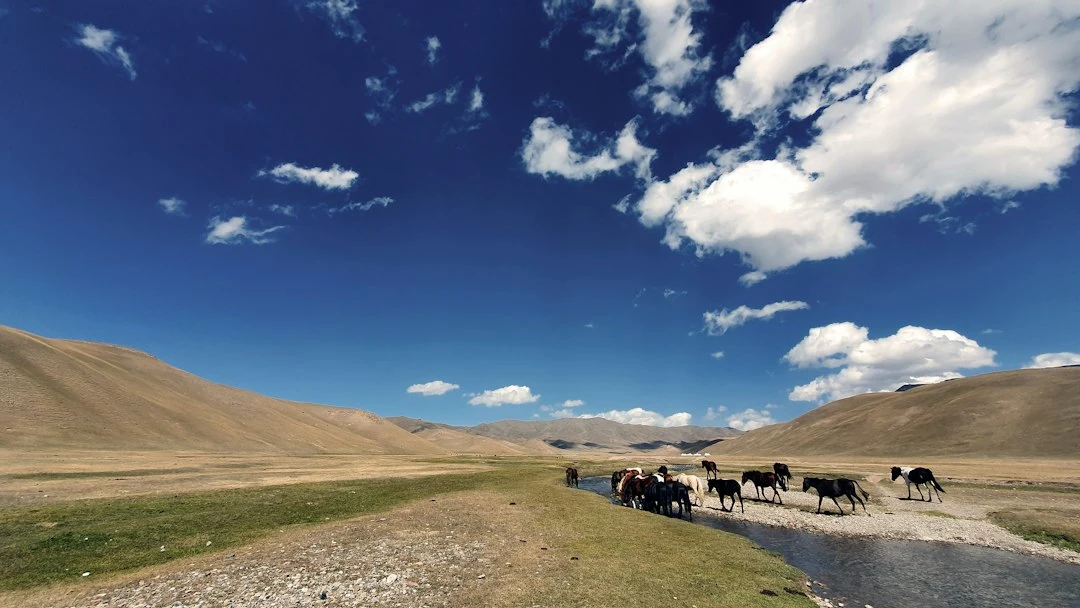
Kyrgyzstan, officially the Kyrgyz Republic, is a mountainous Central Asian country known for alpine trekking, nomadic yurt culture and lakes such as Issyk-Kul. Most visitors arrive in Bishkek and then head into the Tian Shan, where mountain scenery, horse-riding traditions and village hospitality define the experience.
Last checked: November 2026
The country declared independence from the Soviet Union on 31 August 1991. Kyrgyz is the state language and Russian is an official language, and World Bank data puts the population at about 7.3 million in 2025. Bishkek is the political and economic centre, while Osh anchors the south. Before you plan a trip, read our guide to Kyrgyzstan visa requirements, and see the best places to visit in Kyrgyzstan to shape your route. The best time to visit Kyrgyzstan depends on region and activity. When you are ready to plan, follow a sample route in our Kyrgyzstan itinerary, compare where to stay in Kyrgyzstan, check flights to Kyrgyzstan and read how to get around Kyrgyzstan.
What sets Kyrgyzstan apart is how close everyday life remains to the landscape. Summer pastures called jailoo host seasonal yurt camps, alpine lakes such as Issyk-Kul and Song-Kul draw hikers and riders, and bazaars in Bishkek and Osh show the country’s markets at their liveliest. Travel here suits people who enjoy open space and simple, unhurried routes more than polished resort infrastructure.
Mountains cover most of the country, which is why Kyrgyzstan is sometimes nicknamed the Switzerland of Central Asia. Altitude shapes almost everything about a visit: weather and road conditions change sharply with height, and distances that look short on a map often take a full day by road. Issyk-Kul, the second-largest mountain lake in the world after Lake Titicaca, stays ice-free in winter despite the snow-capped peaks around it.
History of Kyrgyzstan
Kyrgyz history stretches back more than 2,000 years, through early nomadic tribes, Mongol conquest and the Khanate of Kokand to annexation by the Russian Empire in 1876. The country became a Soviet republic in 1936 and declared independence on 31 August 1991, a layered past that still shapes its identity.
Last checked: November 2026
The Kyrgyz state reached its greatest extent after defeating the Uyghur Khaganate in 840 AD. In the 13th century the Mongol expansion pushed Kyrgyz groups southward, and later centuries brought rule or influence from several neighbours. Lake Issyk-Kul served as a stopover on the Silk Road, which links the region to the long history of trade across Eurasia.
In the early 19th century the south came under the Khanate of Kokand, and in 1876 Russian forces incorporated the territory into the Russian Empire. After the Kara-Kyrgyz Autonomous Oblast was created in 1924, the Kirghiz Soviet Socialist Republic was established on 5 December 1936, with its capital at Frunze, a city that regained its earlier name, Bishkek, in February 1991.
Independence was declared on 31 August 1991 and recognised internationally that December, with Askar Akayev as the first president. Mass protests in March 2005, known as the Tulip Revolution, forced him from office, and the country adopted its current constitution on 11 April 2021. For visitors, sites such as Burana Tower and Tash-Rabat caravanserai offer a tangible link to this long history.
Two places tied to this past are on UNESCO’s World Heritage List: Sulaiman-Too Sacred Mountain in Osh, inscribed in 2009, and Burana Tower, which belongs to the Silk Roads: Chang’an-Tianshan Corridor listing inscribed in 2014. Both help explain how trade, faith and migration moved through these valleys for centuries.
Culture and Traditions of Kyrgyzstan
Kyrgyz culture is rooted in nomadic life: the felt yurt, horse games such as kok boru, felt carpets and the oral epic Manas. Several of these traditions appear on UNESCO’s intangible heritage lists, and many remain part of daily life, family celebrations and festivals rather than museum displays.
Last checked: November 2026
The Manas epic, recited by trained storytellers, recounts the unification of Kyrgyz tribes, and UNESCO inscribed the Manas, Semetey and Seytek trilogy in 2013. Akyns, the epic tellers and improvising poets, were recognised in 2008 and perform with the komuz, a traditional stringed instrument.
Craft traditions are equally visible. Shyrdak and ala-kiyiz felt carpets were listed in 2012 as needing urgent safeguarding, and they decorate yurts and homes with patterns that carry symbolic meaning. The yurt itself, known locally as boz ui, remains central to weddings, memorials and summer pasture life, and its construction knowledge is also recognised by UNESCO.
Kok boru, a mounted game in which two teams compete to carry a goat carcass into the opponent’s goal, was inscribed in 2017 and is a national sport. It is a headline event at the World Nomad Games, and Nowruz, the spring new-year festival, is widely celebrated across the country. Hospitality follows long-standing customs: bread is broken by hand and shared, and guests are usually served first.
Food and Cuisine of Kyrgyzstan
Kyrgyz cuisine is hearty and built around meat, noodles, dairy and bread, shaped by nomadic herding and by Dungan, Uzbek and Central Asian influences. Signature dishes include beshbarmak, plov, lagman, manti and ashlyan-fu, along with fermented mare’s milk drink kymyz in summer.
Last checked: November 2026
Beshbarmak, the name meaning “five fingers”, is boiled meat served over noodles with onion broth and traditionally eaten by hand, usually at celebrations. Plov, a rice dish with meat and carrots that originated in the Fergana Valley, is a staple of the south, while lagman and manti are everyday foods in the north.
- Beshbarmak: boiled meat with hand-cut noodles and onion broth, served on special occasions.
- Plov: rice cooked with meat and carrots; Osh and Uzgen are known for it.
- Lagman: hand-pulled noodles with a meat and vegetable sauce, of Dungan origin.
- Manti: steamed dumplings filled with lamb or beef and onion, sometimes pumpkin.
- Ashlyan-fu: a cold, spicy-sour noodle dish of Dungan origin, most associated with Karakol.
- Oromo: a steamed rolled pie of minced meat and onion, often served to guests.
- Boorsok: small pieces of fried dough that decorate the table at celebrations.
- Kuurdak: a fried meat and onion dish traditionally cooked in a cauldron.
- Shashlik: grilled meat skewers, often mutton, served with bread.
- Kurut: dried balls of fermented milk eaten as a salty snack.
- Kymyz: slightly alcoholic fermented mare’s milk, available fresh mainly from about May to August.
Meals usually begin with bread, tea and small dishes before the main course, and sharing food is part of hospitality. Dungan and Uyghur communities add noodle dishes that many visitors count among the best things they eat in the country.
Hospitality at the table starts with bread and tea. Food is traditionally laid out on a low table or cloth known as a dastarkhan, with bread such as lepyoshka, a round loaf baked in a clay oven, plus boorsok, dried fruit, cream and jam, before the main dish arrives. Black or green tea is poured into small bowls and topped up often, and declining the first offer is considered impolite. Fermenting and drying, as in kurut and kymyz, were the old ways of keeping dairy without refrigeration.
Explore Kyrgyzstan Travel Guides
Explore our detailed guides to plan every part of your Kyrgyzstan trip.
Kyrgyzstan: Best Places
From Bishkek and Osh to Issyk-Kul, Song-Kul and Burana Tower, a grouped guide to Kyrgyzstan's top sights with time needed and the...
View Guide ›Kyrgyzstan: Best Time to Visit
Summer suits trekking and yurt stays, spring and autumn suit cities, and winter suits skiing. Compare seasons, regions, festivals and packing needs...
View Guide ›Kyrgyzstan: Flights
Most visitors fly into Manas Airport near Bishkek. Check airports, common connecting hubs, arrival tips and a pre-flight checklist before you book.
View Guide ›Kyrgyzstan: How to Get Around
Compare marshrutkas, shared taxis, ride-hailing, domestic flights and car hire, with the best option for each route and a checklist of common...
View Guide ›Kyrgyzstan: Itineraries
Four realistic routes of 3, 5, 7 and 10 days from Bishkek, covering Issyk-Kul, Karakol, Song-Kul and Tash-Rabat, with overnight stops and...
View Guide ›Kyrgyzstan: Visa
Entry rules depend on your passport. See who can enter visa-free, how the official e-visa works, which documents you need and what...
View Guide ›Kyrgyzstan: Hotels
Choose the right base, from Bishkek hotels to Karakol guesthouses, lakeside resorts and mountain yurt camps, with advice on stay types and...
View Guide ›Explore Kyrgyzstan Tours
Discover guided tours and adventures in Kyrgyzstan. Compare itineraries, prices and traveller reviews on TourRadar before you book.
Guided tours & deals
Affiliate partner · Globe Navo may earn a commission from qualifying bookings at no extra cost to you.
❓ Kyrgyzstan FAQ
Where is Kyrgyzstan?
Kyrgyzstan is a landlocked country in Central Asia, bordered by Kazakhstan, Uzbekistan, Tajikistan and China. Its capital, Bishkek, lies in the north, and mountains cover most of its territory, including the Tian Shan range and the large alpine lake Issyk-Kul.
What is the capital of Kyrgyzstan?
The capital of Kyrgyzstan is Bishkek, in the northern Chuy Valley near the Kazakh border. It is the political and economic centre and the usual arrival point for visitors, while Osh is the second-largest city and the main hub in the south.
What language is spoken in Kyrgyzstan?
Kyrgyz is the state language and Russian is an official language. Russian is widely used in cities and business, while Kyrgyz is more common in villages. English is less common outside Bishkek and tourist areas, so a translation app can help in rural places.
What currency does Kyrgyzstan use?
Kyrgyzstan uses the Kyrgyzstani som (KGS). Cash is useful in villages, yurt camps and on shared minibuses, while cards are more widely accepted in Bishkek and larger towns. Carry small notes for everyday purchases outside the cities.
What is Kyrgyzstan known for?
Kyrgyzstan is known for its mountains, Lake Issyk-Kul, nomadic yurt culture, the Manas epic and the horse game kok boru. Visitors come for trekking, village stays and Silk Road heritage such as Burana Tower and Tash-Rabat.
Plan Your Trip to Kyrgyzstan
Your Next Adventure in Kyrgyzstan Awaits!
Explore Deals →🎁 Best deals for Kyrgyzstan
Offers from trusted travel stores for your Kyrgyzstan trip. Compare a few options before you book, and check each store's terms for the final price.
Browse by type: Hotel deals · Flight deals · Travel eSIM · Car rental
More destinations to explore
GabonGabon is a rainforest and Atlantic-coast country in Central Africa. Learn where it is,…
 HaitiDiscover Haiti: where it is, its revolutionary history, Creole culture and traditions, and signature…
 JamaicaJamaica travel guide covering where Jamaica is, its history, culture and traditions, and its…