 CyprusCyprus travel guide covering where the island is, how it is governed, its history,…
DESTINATION
Fiji
📅 Last updated:
🌍 Quick Facts

Fiji at a glance
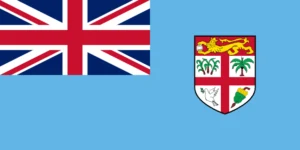
Capital: Suva
Currency: Fijian dollar (FJD)
Language: English, Fijian (iTaukei), Fiji Hindi
Population: About 900,000 (approximate)
Time zone: FJT (UTC+12)
Calling code: +679
Internet domain: .fj
Main airport: Nadi International Airport (NAN)
Best time to visit: May to October (dry season)
📍 Fiji Map
🖼️ Fiji: Location, History, Culture & Food
✨ Complete Travel Guide
Where Is Fiji Located?
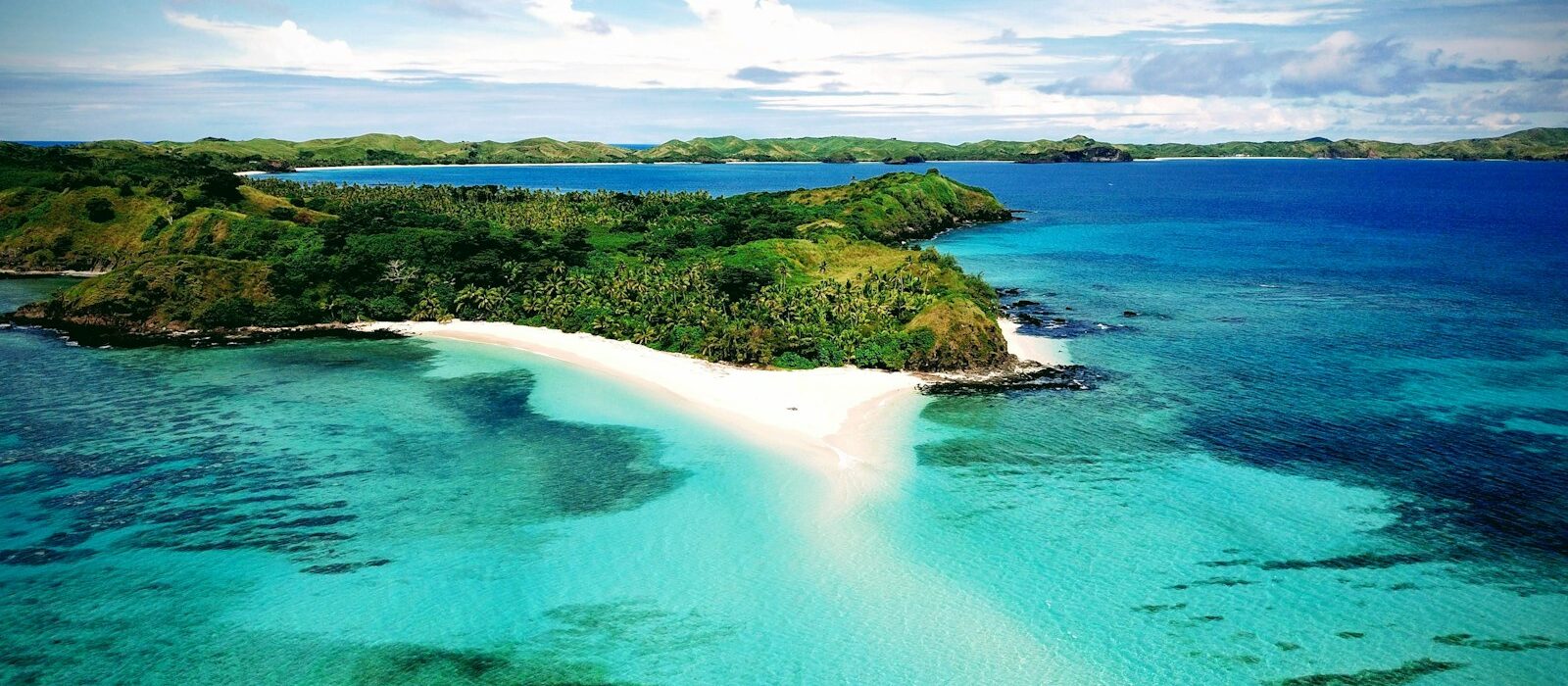
Fiji is an island nation in the South Pacific Ocean, roughly 2,000 kilometres north of New Zealand and about 3,000 kilometres east of Australia. It spans more than 300 islands, with most people living on the two largest, Viti Levu and Vanua Levu.
Last checked: November 2026
Fiji sits near the 180th meridian, which is why the country’s time zone is among the first to see each new day. The group lies between Vanuatu to the west, Tonga to the east and Samoa to the northeast, within Melanesia but close to Polynesia, and that crossroads shows in its people and customs.
Roughly 110 of the islands are inhabited. Viti Levu holds the capital Suva on its southeast coast, Nadi and its international airport on the west, and the sugar and port city of Lautoka to the north of Nadi. Vanua Levu lies to the northeast, with Labasa and Savusavu as its main towns. Taveuni, Kadavu, Ovalau and the Lau, Yasawa and Mamanuca groups complete a varied map of volcanic highlands, rainforest, lagoons and coral reefs.
The terrain explains much of the climate. Mountain ranges on the larger islands catch moist trade winds, making the southeast wet and green, while the northwest is noticeably drier and sunnier. Fiji’s land area is about 18,000 square kilometres, but the surrounding ocean is far larger, and the reefs that fringe many islands are central to its identity.
Distances matter when you plan. Viti Levu is large enough to need hours of driving between Nadi and Suva, while outer groups such as the Yasawas, Lau and Kadavu are reached by boat or small plane. Most international visitors therefore treat Fiji as a base on one or two islands rather than a single road trip, a point developed in our guides to getting around Fiji and Fiji itineraries.
Introduction to Fiji
Fiji is a Pacific republic known for coral reefs, warm hospitality and a blend of Melanesian, Polynesian, Indian and European influences. Its capital is Suva, its currency is the Fijian dollar, and English is an official language, so visitors find communication straightforward almost everywhere.
Last checked: November 2026
Most visitors arrive at Nadi and head to the Mamanuca or Yasawa islands, the Coral Coast or Denarau, but the country offers far more than resort beaches. Highlights include village visits, hiking in rainforest on Taveuni, diving on the Great Astrolabe Reef off Kadavu, and the colonial-era streets of Levuka.
The greeting “Bula” is heard everywhere and sets the tone: Fijians are widely described as relaxed, welcoming and generous. About half of the population is indigenous iTaukei, and a large minority is Indo-Fijian, descended mostly from indentured labourers brought during British rule. Tourism and sugar, together with remittances and fisheries, are important parts of the economy.
Visitors often remark that the best part of a trip is the people rather than the scenery. Guests are commonly invited to join a meal, a song or a game of volleyball, and a short conversation in a village or on a bus can turn into an invitation. Accepting graciously, and offering thanks with “vinaka,” is the simplest way to show respect.
English is used in schools, business and signage, while Fijian and Fiji Hindi are the languages of daily life. For practical planning, see our guides to the best places in Fiji, the best time to visit Fiji and Fiji visa requirements.
History of Fiji
People settled Fiji about 3,500 years ago, when Lapita seafarers arrived from the west. Over the centuries Fiji developed chiefly societies, was claimed by Britain in 1874, and became independent on 10 October 1970. It has been a republic since 1987.
Last checked: November 2026
The Lapita are known for distinctive pottery, and archaeological sites across the islands record their voyages. Later Melanesian and Polynesian contacts, particularly with nearby Tonga and Samoa, shaped Fijian society into rival chiefdoms. European sailors first charted the islands in the 17th and 18th centuries; Abel Tasman sighted them in 1643, and Captain William Bligh sailed through the group in 1789 after the mutiny on the Bounty, which is why a stretch of water is named Bligh Water.
In the 19th century traders, missionaries and settlers arrived. Ratu Seru Cakobau, one of the most powerful chiefs, and other leaders ceded Fiji to Britain in 1874. From 1879 until 1916 the colonial government brought indentured labourers from India to work on sugar plantations, creating the Indo-Fijian community that remains central to national life. Levuka on Ovalau served as the first colonial capital before Suva took over.
Independence came in 1970, and political tensions in later decades included coups in 1987, 2000 and 2006 and a return to elections afterwards. Fiji has since played an active role in Pacific regional affairs and in United Nations peacekeeping. Museums such as the Fiji Museum in Suva give visitors a clear introduction to this story.
Understanding this background helps visitors make sense of what they see today: the chiefly protocols in villages, the temples and mosques in towns, the sugar-cane fields that still shape rural life, and the multicultural mix in the markets of Suva and Lautoka. Fiji’s modern identity draws on all of these threads at once.
Culture and Traditions of Fiji
Fijian culture centres on community, respect and ceremony. Kava, a drink made from the roots of the yaqona plant, is shared at welcomes and gatherings, and visitors to villages are expected to follow local etiquette such as modest dress and presenting a sevusevu gift.
Last checked: November 2026
In an iTaukei village, a visitor is typically welcomed by a chief or spokesperson in a kava ceremony. The sevusevu, usually a bundle of kava roots, is offered first; guests clap once before drinking and say “bula,” then clap three times after. Hats and sunglasses are generally removed, shoulders and knees are covered, and it is polite to ask before taking photographs. Your host or tour operator will explain the details.
Music and dance matter greatly. The meke combines song, dance and storytelling to recount legends and history, and the lali, a wooden slit drum, calls people to events. Handicrafts include masi, a bark cloth decorated with geometric patterns, along with woven mats and wood carvings. Many villages keep traditional bure houses, though modern materials are increasingly common.
Indo-Fijian culture adds Hindu, Muslim and Sikh traditions, temples, mosques and festivals. Diwali is a national holiday, and the Sri Siva Subramaniya Temple near Nadi is one of the best-known Hindu temples in the South Pacific. Christianity, especially Methodism, is also strong among iTaukei communities, and Sundays are generally quiet days with church services and family meals. Fiji Day, on 10 October, marks independence, and the Hibiscus Festival in Suva is a well-known annual event; check official calendars for current dates.
Hospitality is a cultural value in its own right. Visitors to villages are often welcomed as guests of the whole community, and the exchange of gifts, songs and food is part of the experience. Following simple etiquette, such as not touching someone’s head, keeping your voice calm and asking permission before entering a home, goes a long way.
Food and Cuisine of Fiji
Fijian food combines Pacific, Indian and Chinese influences, built on fresh seafood, root crops, coconut and spices. Signature dishes include kokoda, a raw fish dish in coconut milk and lime, and lovo, food slow-cooked in an earth oven.
Last checked: November 2026
Traditional cooking relies on the produce of land and sea: fish, crab, taro (dalo), cassava, breadfruit and coconut. Indo-Fijian cooking adds curries, roti and snacks, and the two traditions meet in many everyday meals. Here are ten dishes worth looking for:
- Kokoda: raw fish cured in lime juice, then mixed with coconut milk, onion, tomato and chilli.
- Lovo: meat, fish and root vegetables wrapped in leaves and cooked in an underground oven.
- Rourou: young taro leaves cooked in coconut milk, often served with cassava.
- Palusami: taro leaves with coconut cream, baked in a parcel.
- Cassava (tavioka): boiled, fried or baked, a staple side dish.
- Duruka: the flowering shoots of a type of sugar cane, boiled or steamed in coconut milk.
- Nama: sea grapes, a seaweed with a fresh, salty pop, eaten with lime and coconut.
- Vakalolo: a sweet pudding of cassava, taro or breadfruit with coconut cream.
- Fish or seafood in lolo: fish simmered in coconut milk.
- Curry and roti: Indo-Fijian curries with flatbread, a favourite everyday meal.
Kava is the traditional drink, tasting earthy and slightly numbing on the tongue. Fresh coconut water is available almost everywhere, and local fruit includes papaya, pineapple and mango. Ask about ingredients if you have allergies or dietary needs, as coconut appears in a great many dishes, and note that many Indo-Fijian restaurants serve vegetarian options.
Plan your Fiji trip
Continue planning with our guides to Fiji visa requirements, the best places to visit in Fiji, the best time to visit Fiji, Fiji itinerary ideas, where to stay in Fiji, flights to Fiji and getting around Fiji.
Explore Fiji Travel Guides
Explore our detailed guides to plan every part of your Fiji trip.
Explore Fiji Tours
Discover guided tours and adventures in Fiji. Compare itineraries, prices and traveller reviews on TourRadar before you book.
Guided tours & deals
Affiliate partner · Globe Navo may earn a commission from qualifying bookings at no extra cost to you.
❓ Fiji FAQ
Where is Fiji?
Fiji is an island country in the South Pacific, about 2,000 km north of New Zealand. It has more than 300 islands, of which roughly 110 are inhabited, and its largest island is Viti Levu, home to the capital Suva and Nadi international airport.
What is the capital of Fiji?
The capital is Suva, on the southeast coast of Viti Levu. It is the political and commercial centre and the largest city, while Nadi, on the west coast, is the main gateway for international visitors.
What languages are spoken in Fiji?
English, Fijian (iTaukei) and Fiji Hindi are the main languages. English is widely used in business, schools and tourism, so visitors rarely have difficulty, though learning bula (hello) and vinaka (thank you) is appreciated.
What currency does Fiji use?
Fiji uses the Fijian dollar (FJD). Cards are widely accepted at resorts and larger businesses, but carry some cash for villages, markets and small islands, and check current exchange rates before you travel.
What is kava and should visitors try it?
Kava is a traditional drink made from the yaqona root and shared at ceremonies. It has an earthy taste and a mild numbing effect. Trying it when invited is polite, but it is optional, and you should ask your host if you have health concerns.
Plan Your Trip to Fiji
Your Next Adventure in Fiji Awaits!
Explore Deals →🎁 Best deals for Fiji
Offers from trusted travel stores for your Fiji trip. Compare a few options before you book, and check each store's terms for the final price.
Browse by type: Hotel deals · Flight deals · Travel eSIM · Car rental
 SimOptionsFind the latest SimOption promo code and coupon code for travel eSIM data plans. See how to apply an offer at checkout, fix common code errors and stay connected abroad.
Get Coupon View Deal
 TourRadarTourRadar is an online marketplace for multi-day guided tours, small-group trips and tailor-made journeys offered by independent tour operators around the world.
Get Coupon View Deal
More destinations to explore
CyprusCyprus travel guide covering where the island is, how it is governed, its history,…
 GhanaGhana travel guide to its location in West Africa, history, culture and food, from…
 CambodiaCambodia travel guide covering location, history, culture and food, with links to visa, itinerary,…