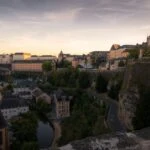
Luxembourg is small enough to cover in a few days, yet each corner feels different: a fortified capital, castle towns, wine villages, forested gorges and former steel country. This guide groups the best places by type, with why to go, what to see, how much time to allow and who each place suits. Planning first? Start with the Luxembourg overview.
Quick Answer: Where Should You Go First?
Start with Luxembourg City for its UNESCO-listed old quarters and fortifications, then add Vianden for its castle, the Mullerthal region for forest hiking and the Moselle valley for wine villages. These four give the best mix of history, nature and food in a compact area.
Last checked: November 2026
Historic Places
Luxembourg City Old Quarter and Fortifications
The old quarters and fortifications of the capital are a UNESCO World Heritage Site, and the rock-cut casemates, the Corniche promenade and the river districts of Grund and Clausen are the highlights. Allow a full day, or half a day if you only want the old town. It suits first-time visitors, history lovers and photographers. Opening hours for the Bock Casemates and museums vary by season, so confirm them before you go.
Vianden
Vianden is a riverside town in the Our valley, dominated by a large hilltop castle that was restored in the twentieth century. The town is also known for the house where Victor Hugo stayed in exile. Allow half a day. It suits families, castle fans and couples. Check castle opening hours and any seasonal closures on the official site.
Bourscheid and Clervaux
Bourscheid Castle stands above the Sûre river and is one of the largest castle ruins in the country, while Clervaux Castle houses The Family of Man photography exhibition. Each needs about two hours. They work well on a drive through the northern Ardennes.
Natural Places
Mullerthal Region
Known as Little Switzerland, the Mullerthal is a landscape of sandstone cliffs, narrow gorges and beech forest, with a long-distance hiking trail linking its best sections. Allow one full day for a shorter loop or two to three days for the main trail. It suits hikers, photographers and outdoor travellers. Wear sturdy shoes, because paths can be wet and rocky.
Upper Sûre Nature Park
This park in the northwest centres on a reservoir lake and the village of Esch-sur-Sûre, built in a river loop below a castle ruin. It suits walkers, kayakers and visitors who want a quieter day. Plan half a day to a full day.
Wine, Food and Riverside Towns
Moselle Valley
Vineyards line the Moselle along the German border, with villages such as Remich, Grevenmacher and Wormeldange offering wine cellars and riverside walks. The village of Schengen, where the Schengen Agreement was signed in 1985, has a museum on the history of free movement in Europe. Allow half a day to a full day. It suits wine lovers, cyclists and slow travellers.
Echternach
Echternach is the country’s oldest town, grown around a medieval abbey and the Basilica of Saint Willibrord. It is also the starting point for many Mullerthal trails and hosts the famous Dancing Procession in spring. Allow half a day.
Cities and Cultural Areas
Esch-sur-Alzette and the Minett Region
Esch-sur-Alzette is Luxembourg’s second city, set in the former iron and steel area known as the Minett. Industrial sites such as Belval have been turned into cultural and university districts, and the wider area is part of a UNESCO biosphere reserve. It suits visitors interested in industrial heritage, street art and modern architecture. Allow half a day.
Kirchberg Plateau, Luxembourg City
The modern quarter of the capital is home to European institutions, the Philharmonie concert hall and the Mudam museum of contemporary art. It suits architecture and art fans and needs about two hours.
How to Combine These Places
A three-day plan could be Luxembourg City on day one, the Mullerthal and Echternach on day two, and Vianden or the Moselle on day three. Distances between these places are short, and public transport links the main towns, as explained in our guide to getting around Luxembourg.
Official Sources
- Visit Luxembourg, the national tourist board
- UNESCO World Heritage listing for the City of Luxembourg
Frequently Asked Questions
What is the single best place to visit in Luxembourg?
Luxembourg City is the best starting point because of its UNESCO-listed old quarters, museums and easy transport links. There is no official ranking of places, so choose by interest: castles, hiking, wine or modern culture.
How many days do I need to see the main places?
Three days covers Luxembourg City plus two day trips. Five days lets you add the Moselle valley and Vianden at a relaxed pace, while one day is enough for the capital alone.
Is Luxembourg good for hiking?
Yes. The Mullerthal region and the Ardennes in the north have marked trails of different lengths and difficulty. Check trail conditions locally after heavy rain, as some sections can be slippery.
Are the castles open all year?
Opening dates differ by castle and season, and some sites reduce hours in winter. Confirm opening times on the official site of each castle or on Visit Luxembourg before travelling.